

Buddhist Ring Meaning: Symbols, Fit & How to Choose
A Buddhist ring is a ring that carries a Buddhist symbol, mantra or deity image. People wear it as a personal reminder of compassion, mindfulness or protection rather than as a status piece. Tibetan-style rings are especially varied: some are engraved with the six-syllable mantra, some hold a dzi bead, and others show a guardian such as Green Tara or Mahakala. This guide explains what the common designs mean, how to choose a fit, and how to wear and care for a ring respectfully.
What Does a Buddhist Ring Mean?
There is no single meaning. The meaning comes from the symbol on the ring, and the symbol usually points to a quality that practitioners reflect on: compassion, wisdom, steadiness or protection. For many wearers the ring works as a quiet cue. Seeing it on your hand during the day is a reason to pause, breathe, or choose a kinder response.
It is worth being honest about what a ring cannot do. A piece of jewelry is a symbol and a reminder. It is not a medical item, and it does not guarantee luck, wealth or protection. Traditional associations are shared here as cultural background, and your own reading of the symbol matters most.
Common Symbols on Tibetan Buddhist Rings
| Symbol | Traditional association | Good to know |
|---|---|---|
| Six-syllable mantra (Om Mani Padme Hum) | Compassion and mindfulness | One of the most recognized Tibetan mantras; often engraved as Sanskrit-style or Tibetan script |
| Dzi bead | Protection and good fortune in Himalayan folk tradition | Patterns (eyes, stripes) vary by bead; see our dzi bead guide |
| Mandala | Wholeness, order and impermanence | Learn more in Mandala and Endless Knot Meaning |
| Eight Auspicious Symbols | A set of eight traditional good-fortune emblems | See the Eight Auspicious Symbols guide |
| Vajra | Indestructible wisdom and clarity | Read Vajra Meaning for details |
| Green Tara | Compassionate, swift help | A deity image, so treat it with respect; see the Green Tara guide |
| Mahakala | A protector deity | Fierce in appearance by tradition; see Who Is Mahakala? |
Buddhist Rings to Compare at KyLin Aura
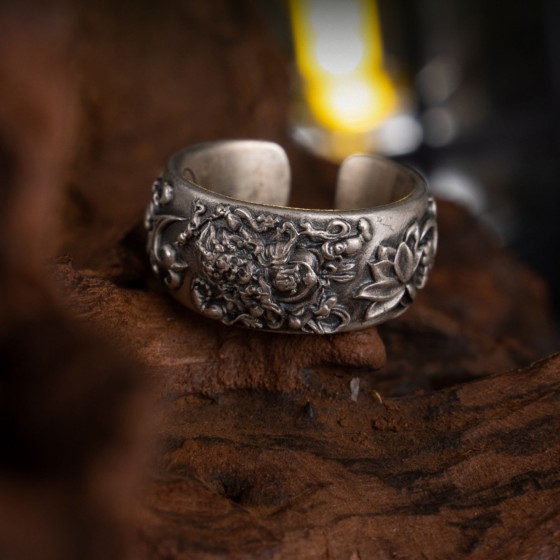
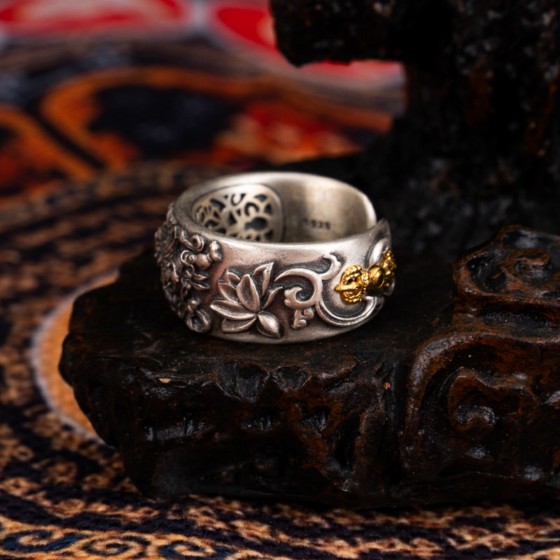
The rings below show different approaches to the same tradition. Compare the materials, finish and size notes on each product page before you choose.
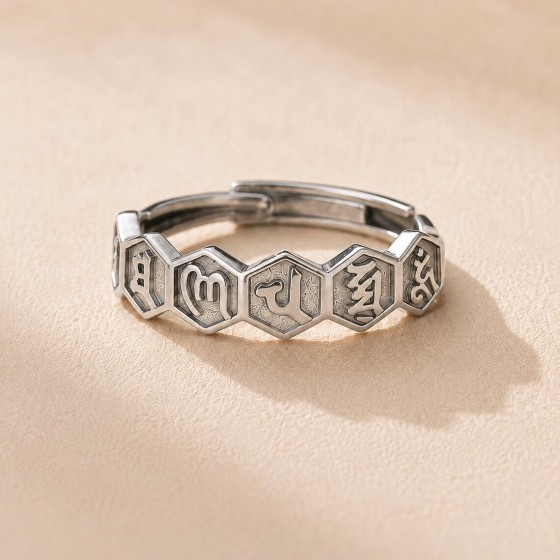
Sterling Silver Six-Syllable Mantra Ring
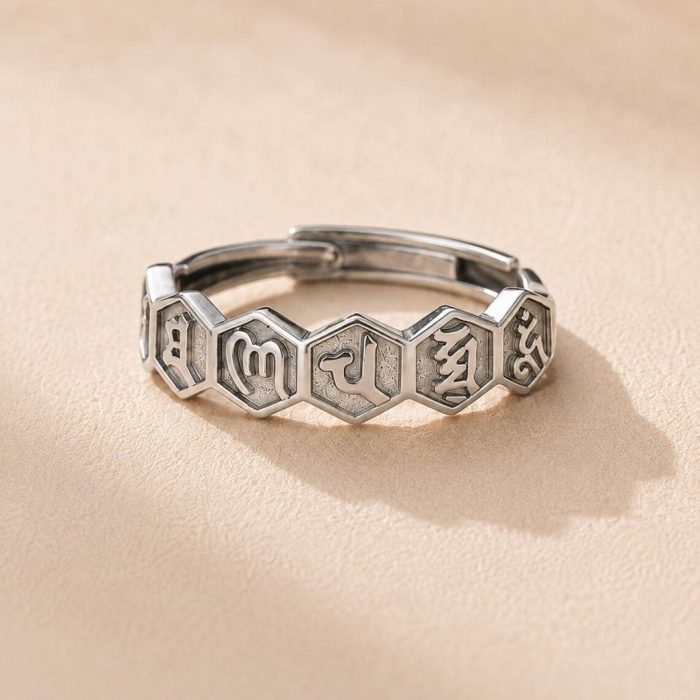
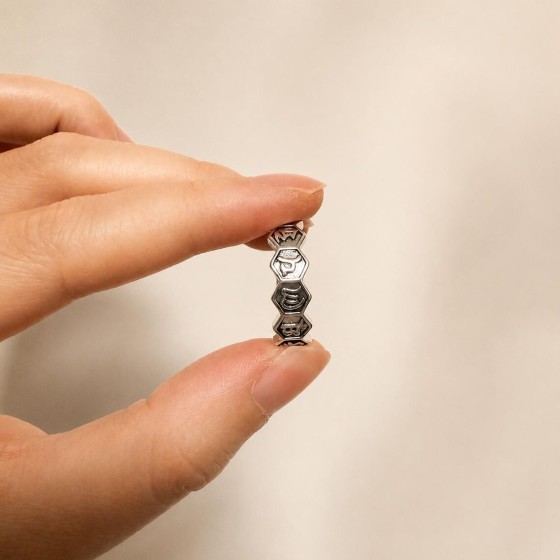
The Six-Syllable Mantra Ring has a row of hexagonal panels carved with Sanskrit-style characters and an adjustable open band. Its geometric look is more modern than ornate, so it suits people who want a subtle mantra ring that works as an index or pinky ring and for couples.
Green Tara Sterling Silver Tibetan Buddhist Ring
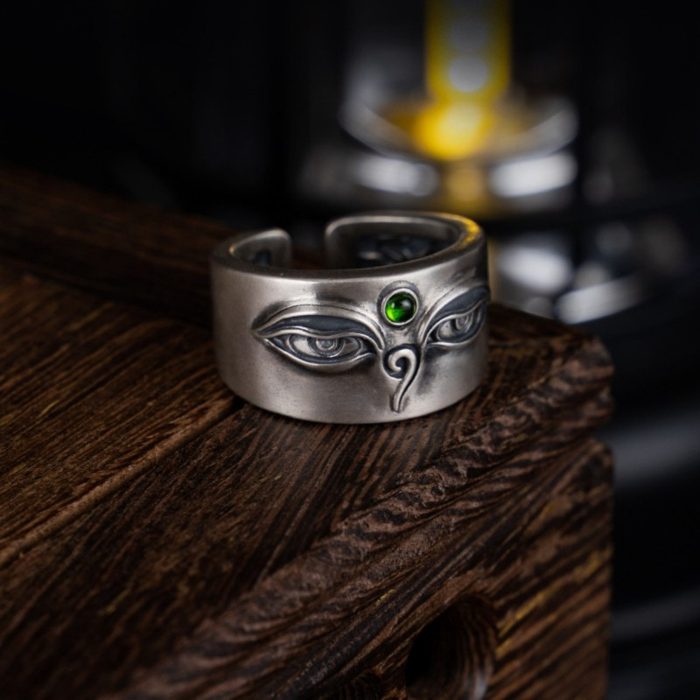
The Green Tara Ring is made of S925 sterling silver and shows the figure of Green Tara, associated with compassion and help in times of fear. It has an adjustable opening. A deity image calls for a little extra care in where and how you wear it (see the etiquette notes below).
Mahakala Tibetan Sterling Silver Ring
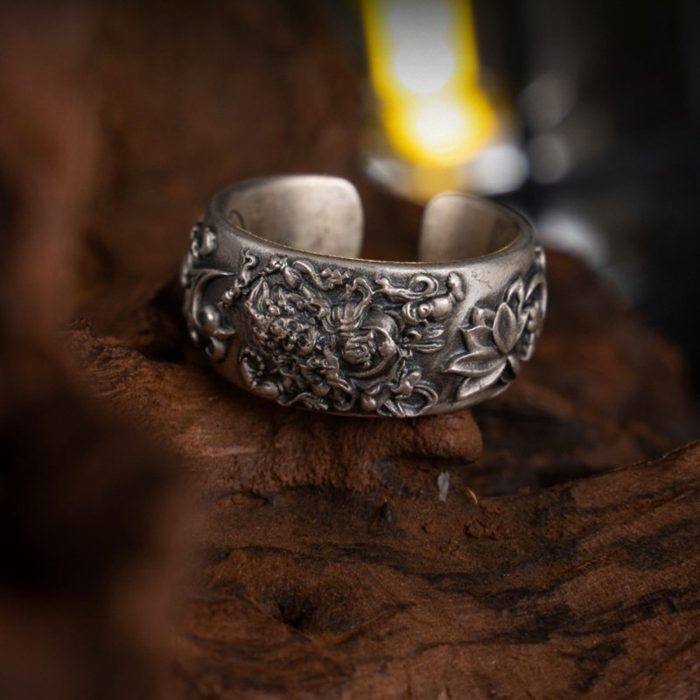
The Mahakala Ring is inspired by the great protector deity in Tibetan Buddhism. It is an S925 sterling silver ring with an adjustable opening, and it makes sense for someone who feels a personal connection to this protector figure.
Tibetan Mandala Dzi Silver Ring
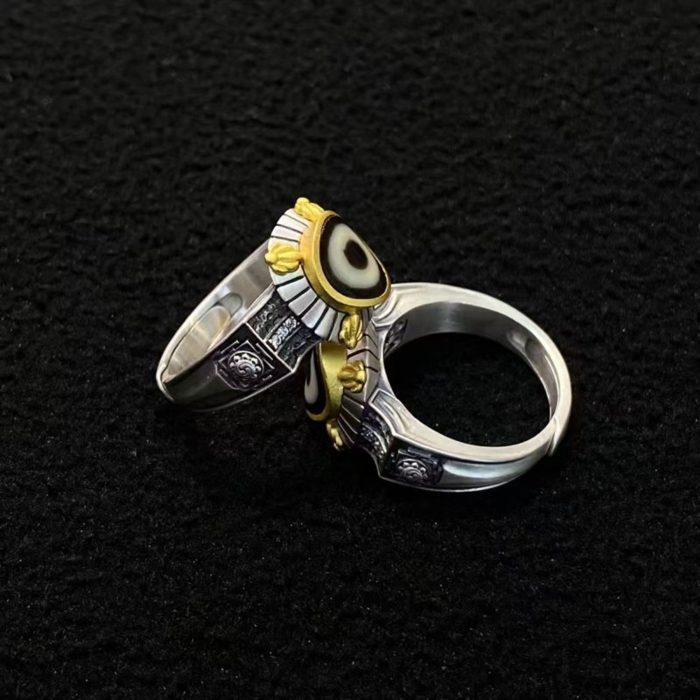
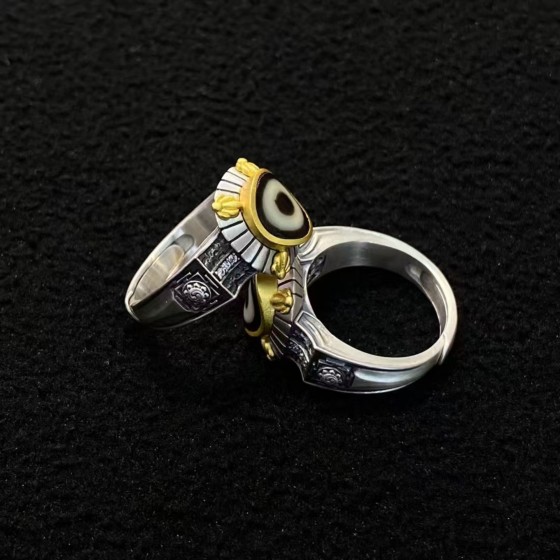
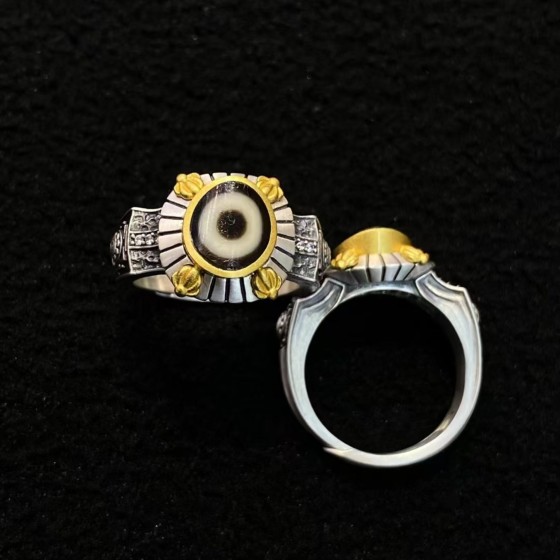
The Mandala Dzi Silver Ring centers on a dzi bead and uses mandala-inspired detailing on the band. It is a bolder statement piece than a plain mantra band. Dzi beads are natural stone, so patterns differ slightly from ring to ring.
Sterling Silver Ashtamangala Mantra Ring
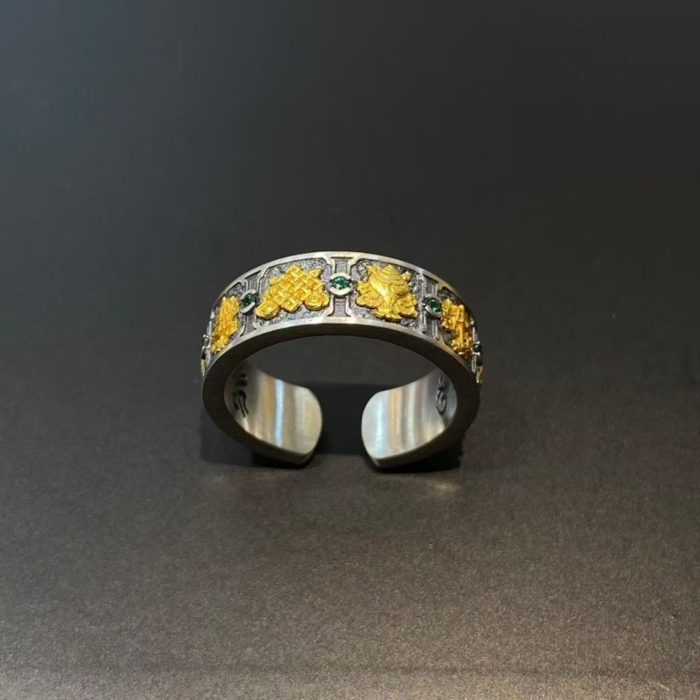
The Ashtamangala Mantra Ring engraves the Eight Auspicious Symbols on the outer band and a Tibetan mantra on the inside, with a gold-plated finish and small crystal accents. The inner mantra is a private detail: only the wearer knows it is there.
How to Choose the Right Buddhist Ring
- Start with the symbol. Pick the design whose meaning you can explain in one sentence. If you cannot, read about it first.
- Check the fit. Many Tibetan-style rings use an adjustable open band. This is forgiving, but check the product page for the stated inner width and weight, and remember that an open band can slowly change shape if it is bent often.
- Check the material. Look for the silver grade (for example S925, which is 92.5% silver) and any plating or stone notes. Our guide to Tibetan silver explains the difference between sterling silver and base-metal "Tibetan silver."
- Think about daily use. A tall dzi setting can catch on gloves and sleeves, while a flat mantra band is easier for everyday wear.
- Match it to the occasion. A simple mantra ring suits work and daily wear. A bolder dzi or deity ring can be a distinctive gift.
Which Finger and Hand Should You Wear It On?
There is no official Buddhist rule about the finger or hand. People choose by comfort and personal meaning, and both hands are common. Adjustable rings can be worn on an index finger, ring finger or pinky. Pick what feels comfortable and does not interfere with your daily tasks.
Wearing a Buddhist Ring Respectfully
- Many people avoid wearing sacred images in places they consider unclean, such as a bathroom, and remove them before sleeping or washing.
- Treat a deity image as more than decoration. If you are unsure about the figure, ask the seller or read about it.
- You do not need to be Buddhist to wear a Buddhist ring. It is considerate to learn what the symbol means and to avoid wearing it in a way that mocks or trivializes it.
- If you are gifting a ring, include a note on the meaning of the symbol so the recipient understands it.
How to Care for a Sterling Silver Buddhist Ring
Silver darkens naturally over time, and many Tibetan-style rings are deliberately finished with an antique tone in the recesses, so avoid aggressive polishing, which can remove the intended contrast. Keep rings away from perfume, lotion, chlorine and household chemicals, and take them off before swimming or heavy work. Wipe gently with a soft dry cloth and store the ring in a dry pouch. Rings set with a dzi bead or crystal should be kept away from knocks and from sudden temperature changes.
Frequently Asked Questions
What is a Buddha ring?
The phrase usually refers to a ring that features a Buddhist symbol, mantra or image. It can be a mantra band, a dzi bead ring, or a ring with a deity such as Green Tara or Mahakala. The meaning depends on the symbol rather than the word "Buddha."
Is it disrespectful to wear a Buddha image on a ring?
Opinions differ by culture and individual. Many people regard it as respectful when it is worn thoughtfully and kept away from places considered unclean. If you are concerned, choose a mantra or symbol ring rather than a figure of the Buddha himself.
Can anyone wear a Buddhist ring?
Yes. Many people wear religious or cultural symbols because they have personal meaning. Wearing it with understanding and respect is the main point.
Is S925 sterling silver good for a daily ring?
Yes, it is a common choice for daily jewelry. It can tarnish and scratch like any silver, so basic care keeps it looking good.
Do adjustable rings fit all finger sizes?
They fit a range of sizes, but not every finger. Check the dimensions on the product page, and avoid repeatedly bending the band, which can weaken it over time.
Browse all Tibetan and Buddhist rings, explore our Tibetan bracelets, or read What Does a Buddha Necklace Mean? if you are also considering a pendant.
If you prefer wrist jewelry, read our Tibetan bracelet guide to compare dzi bead, yak bone, woven cord and sterling silver styles.