

Dzi Beads Meaning: Uses, Types & How to Choose
Dzi beads meaning comes from their patterned “eyes,” lines, and symbols. Traditionally, Dzi beads are worn, carried, collected, or incorporated into Tibetan jewelry as culturally meaningful objects associated with awareness, protection, harmony, and good fortune. Today, people also choose a Dzi bead necklace, ring, or bracelet for its graphic beauty, craftsmanship, and value as a mindful reminder.
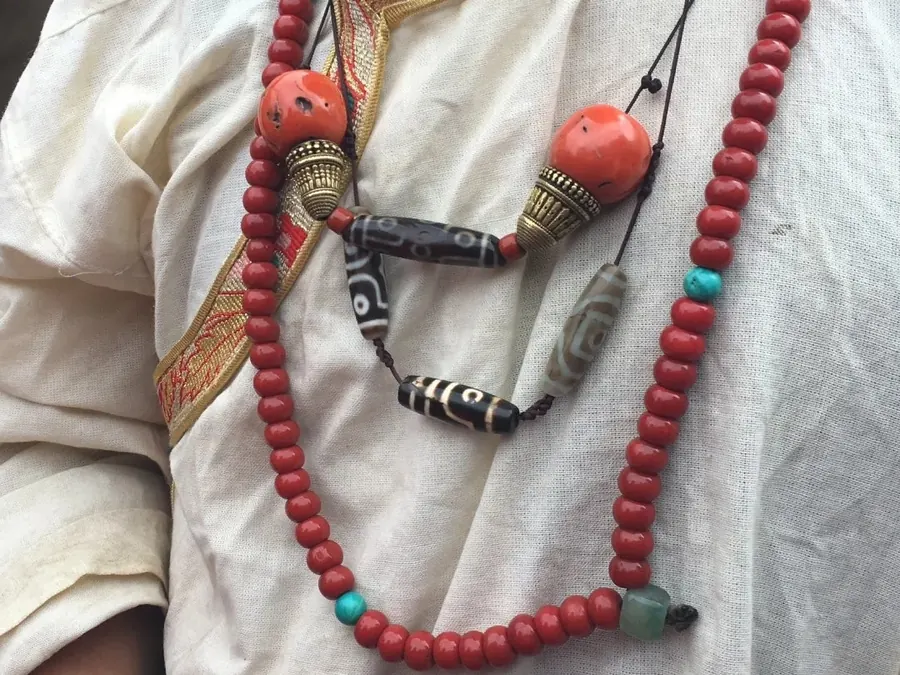
What Is a Dzi Bead?
A Dzi bead is usually an agate or chalcedony bead decorated with contrasting geometric patterns. The English spelling comes from the Tibetan word often transliterated as gzi. Historical beads, later handcrafted examples, and modern etched or treated beads all appear in the market, so “Dzi” describes a broad family rather than one guaranteed age or production method.
Authentic cultural appreciation starts with accurate descriptions. A modern Dzi-style bead can be beautiful and meaningful without being marketed as an ancient artifact.
What Are Dzi Beads Used For?
- Personal adornment: worn in rings, bracelets, necklaces, or silver settings.
- Mindful practice: used as a tactile cue to pause, breathe, or return to an intention.
- Cultural symbolism: chosen for traditional associations attached to an eye, stripe, lotus, vajra, or other motif.
- Gifting and collecting: appreciated for pattern, workmanship, provenance, and personal meaning.
- Family keepsakes: some beads and jewelry are preserved and passed down as valued objects.
Traditional beliefs are part of the cultural story, but a bead does not guarantee protection, luck, healing, lower blood pressure, or any medical result.
Dzi Meaning by Eye Pattern
| Pattern | Traditional association | What to check |
|---|---|---|
| One-eye motif | Focus, clarity, and purpose | A distinct central circle and balanced surrounding lines |
| Two-eye motif | Partnership, harmony, and balance | Two clearly separated circular forms |
| Three-eye motif | Prosperity, longevity, and well-being | Three readable circles rather than irregular spots |
| Nine-eye motif | Completeness, authority, and auspiciousness | Nine intentional motifs matching the description |
| Vajra or geometric motif | Steadiness, clarity, and resilience | Symmetry, clean carving, and secure setting |
Pattern names and interpretations can vary among sellers and communities. Treat them as traditional associations, not standardized product certifications.
Ancient, Vintage, Modern, and Dzi-Style Beads
Age is difficult to establish from photographs alone. Ancient beads are scarce and require specialist provenance. Vintage beads may show genuine wear but are not automatically ancient. Most affordable jewelry uses modern patterned agate or Dzi-style beads. Honest listings should state what is known and avoid unsupported age claims.
- Ask what the bead is made from and how the pattern was produced.
- Request measurements and clear photos of both sides and the drill holes.
- Do not treat cracks, chips, or artificial wear as proof of age.
- Be cautious when an extraordinary historical claim has no documentation.
KyLin Aura Dzi Jewelry Examples
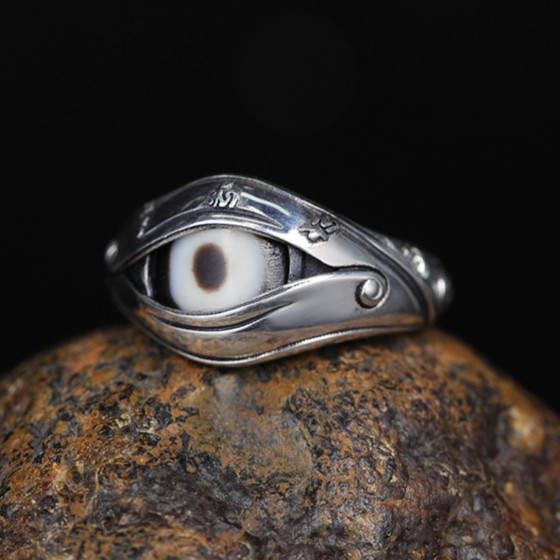
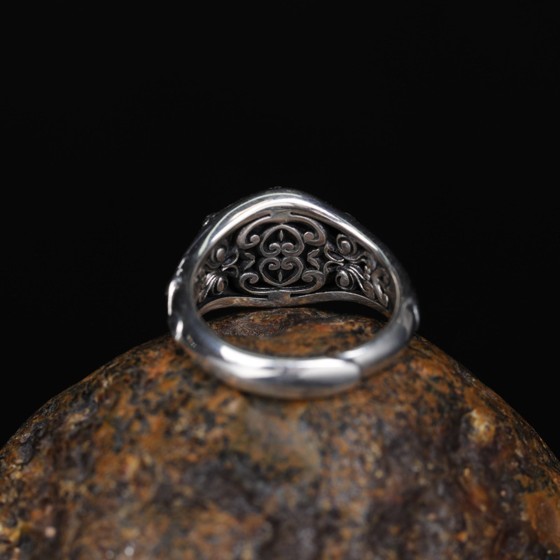
Vajra Dzi Bead Sterling Silver Ring
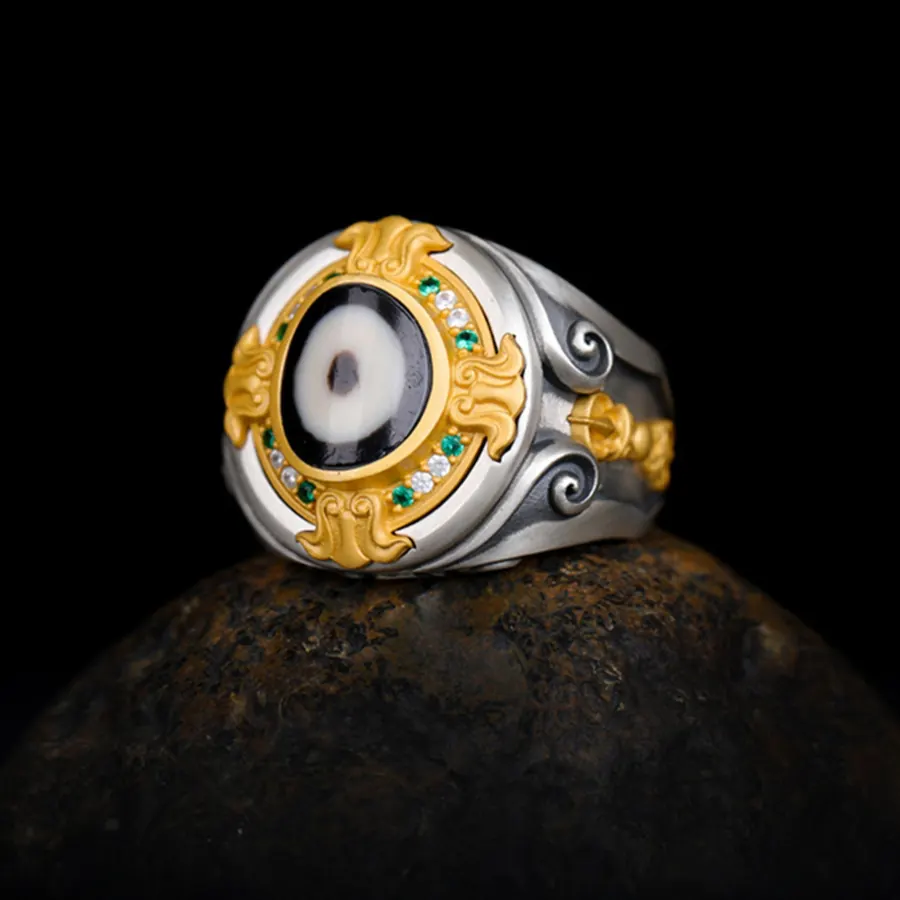
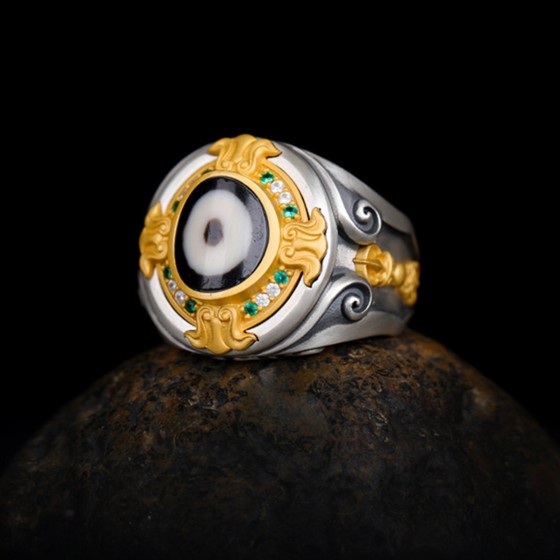
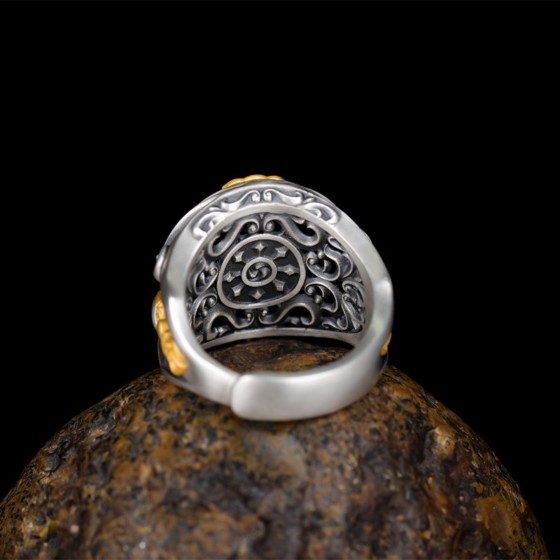
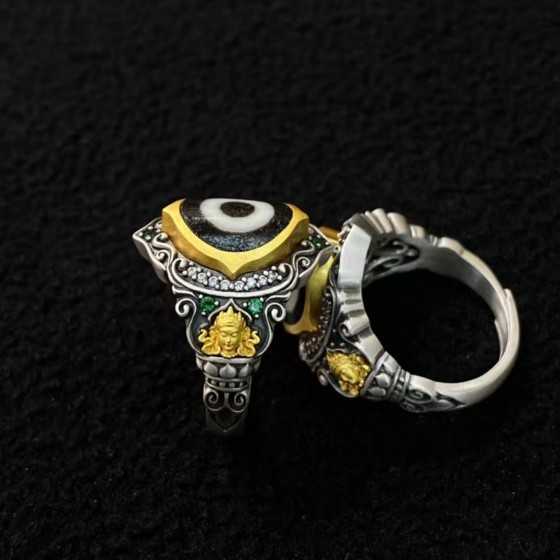
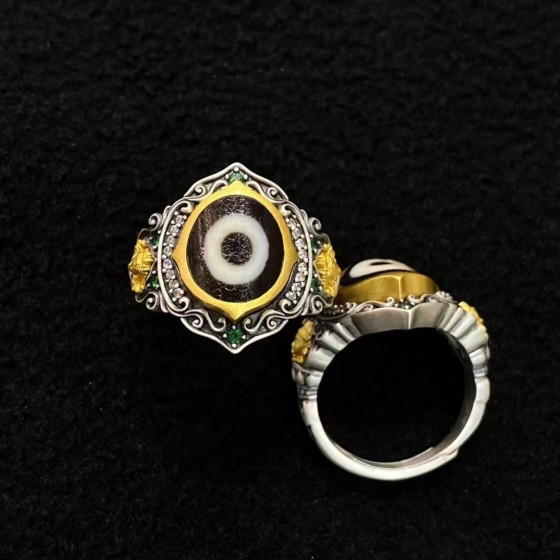
The Vajra Dzi Bead & Crystal Sterling Silver Adjustable Ring places a natural Dzi bead in an S925 silver setting with a vajra-inspired design.
Yak Bone and Dzi Bead Bracelet
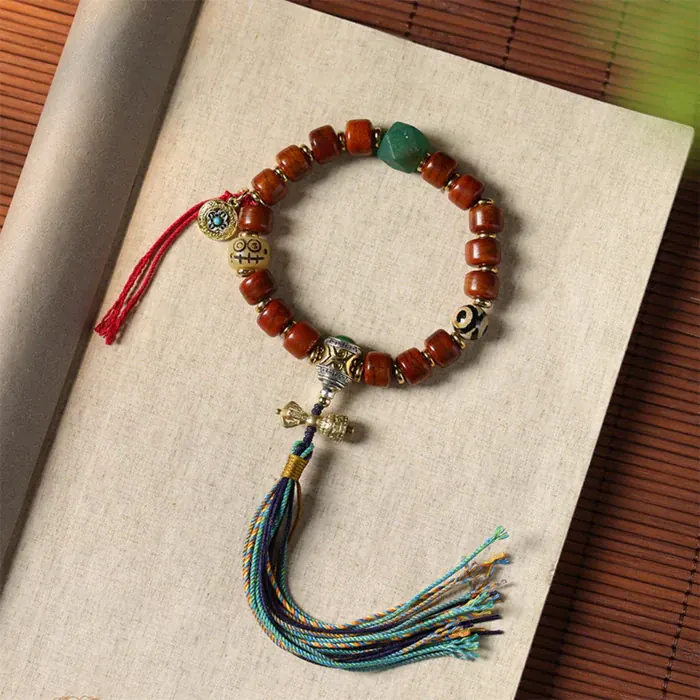
The Tibetan Yak Bone Handmade Bracelet combines Dzi beads, natural texture, and white-copper details. Check fit, cord condition, and the current material disclosure before ordering.
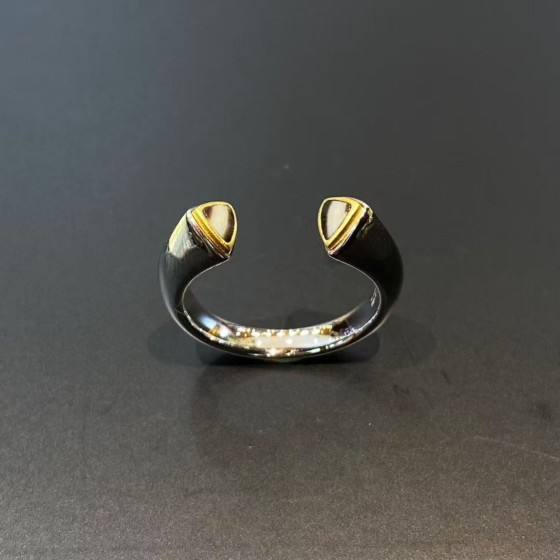
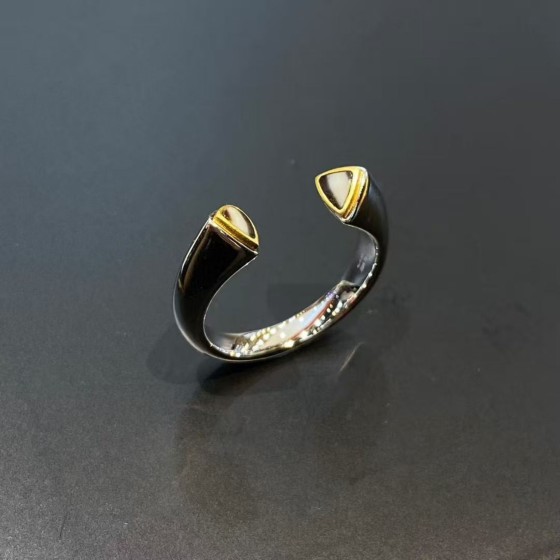
Makara and Dzi Bead Silver Bangle
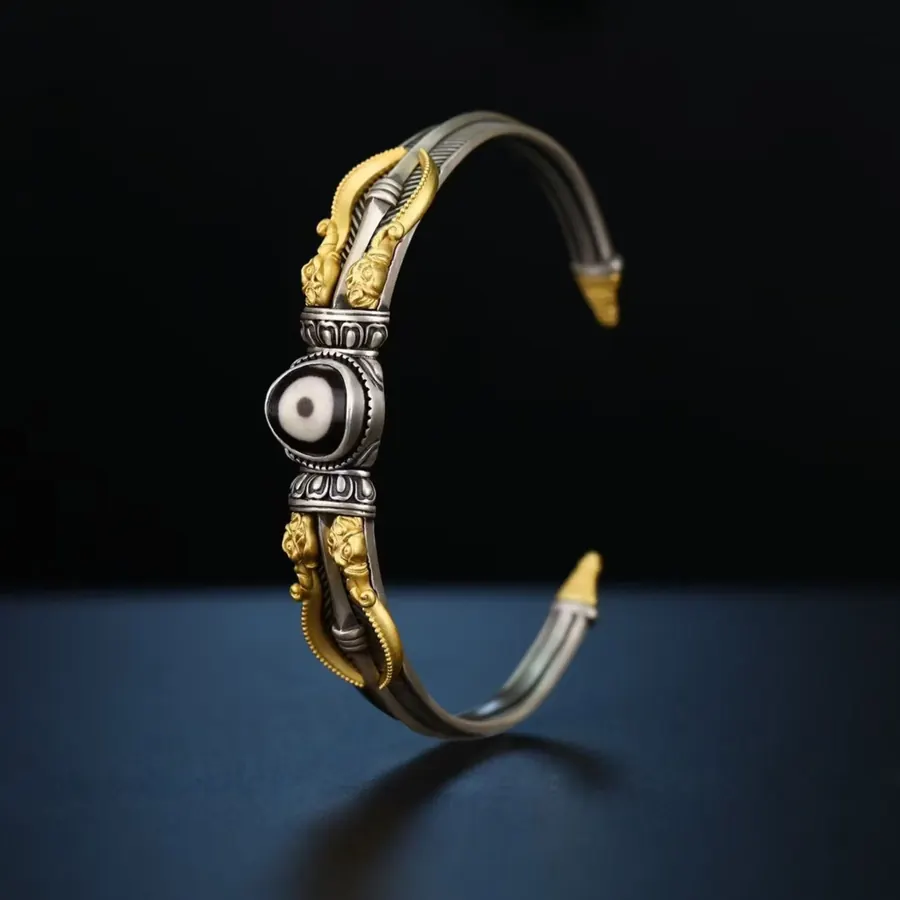
The Hand-Carved Makara & Dzi Bead Silver Bangle pairs a Dzi bead with S925 silver and a Makara motif.
How to Choose a Dzi Bead Necklace, Ring, or Bracelet
- Choose the jewelry format first: a necklace offers a central pendant look, while a ring or bracelet keeps the bead compact.
- Make sure the motif description matches the photographed bead.
- Confirm bead material, metal composition, dimensions, and adjustable range.
- Inspect the setting or cord for secure construction and comfortable edges.
- Buy for documented craft and personal meaning, not guaranteed outcomes.
How to Care for Dzi Beads
Wipe the bead with a soft dry cloth after wear. Avoid perfume, chlorine, cleaning chemicals, prolonged soaking, hard impact, and ultrasonic cleaners. Store it separately to reduce scratches. Follow metal-specific care instructions when set in sterling silver, brass, or white copper.
Frequently Asked Questions
Are Dzi beads Buddhist prayer beads?
Not necessarily. A Dzi bead may appear in Buddhist-influenced jewelry or a mala, but one patterned bead is not automatically a complete prayer-bead strand.
Do Dzi beads have proven health benefits?
No reliable evidence shows that wearing a Dzi bead treats disease or changes blood pressure. It can still function as a meaningful cultural object or mindfulness cue.
How can I tell if a Dzi bead is ancient?
Appearance alone is not enough. Age claims require provenance and expert examination. Most accessible jewelry uses modern beads.
Can anyone wear Dzi jewelry?
Yes, when worn with cultural respect and realistic expectations. Learn the stated motif, avoid exaggerated claims, and care for the piece according to its materials.
Compare more formats in KyLin Aura’s Tibetan-inspired rings, bracelets, and ethnic and cultural accessories.