

Mandala and Endless Knot Meaning in Tibetan Jewelry
A mandala and an endless knot are different Buddhist motifs. A mandala organizes an image around a center; the endless knot uses interwoven lines without an obvious beginning or end. In Tibetan-inspired jewelry, either pattern can become a personal reminder to pay attention to how you live and relate to others.
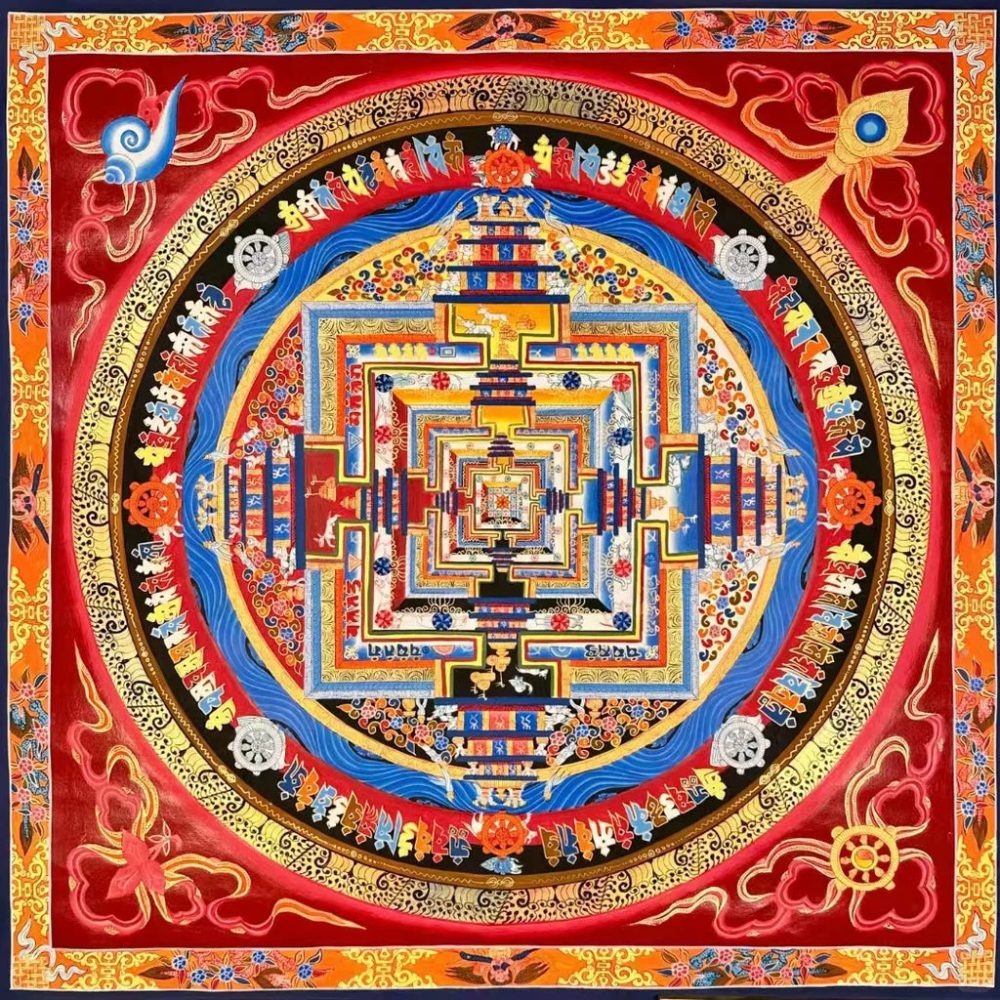
What Does a Mandala Mean?
In Buddhist art, a mandala can represent a deity’s realm and provide a structured image for religious practice. It is more specific than the general idea of a balanced circular pattern. Many examples combine a circle with a square and a central figure. The Rubin Museum’s mandala guide explains these forms and their uses.
A mandala ring usually adapts selected visual features to a small surface. A radial pattern on a ring may be mandala-inspired without reproducing a complete ritual diagram. Read the maker’s description before identifying the design with a particular deity or practice.
What Does the Endless Knot Mean?
The endless knot, also called the auspicious knot, is one of the Eight Auspicious Symbols. Its interlaced structure is traditionally associated with interconnectedness and the relationship between wisdom and compassion. For a wearer, it can prompt reflection on relationships and the consequences of everyday choices.
Look for the continuous, crossing lines that distinguish the knot from a flower, rosette, or mandala. Similar symmetry does not make these symbols interchangeable. Our Eight Auspicious Symbols guide places the knot alongside the other motifs.
Mandala vs. Endless Knot: How to Tell Them Apart
The easiest distinction is how your eye follows the design: toward the center of a mandala, or along the interwoven path of a knot.
| Feature | Mandala-inspired design | Endless knot |
|---|---|---|
| Visual structure | Elements arranged around a center | A continuous interlaced pattern |
| Cultural context | Religious diagrams and their artistic adaptations | One of the Eight Auspicious Symbols |
| Buying question | Does the seller identify the source of the pattern? | Are the crossing lines clear and complete? |
Using Symbolic Jewelry in Everyday Life
You can connect a piece of jewelry with a simple habit: pause before responding to a difficult message, notice your breathing, or remember someone you want to help. The habit gives the object personal meaning. It is not a promise that a shape or gemstone will change events.
If you are buying a gift, explain why the design made you think of the recipient. Consider whether they prefer a discreet ring or a larger statement piece. Someone interested in formal Buddhist practice may appreciate learning the specific cultural context more than a generic claim about energy.
Two KyLin Aura Mandala Rings to Compare
The following products illustrate mandala-inspired jewelry. They are not examples of endless-knot jewelry. Compare their actual materials and proportions rather than choosing by color alone.
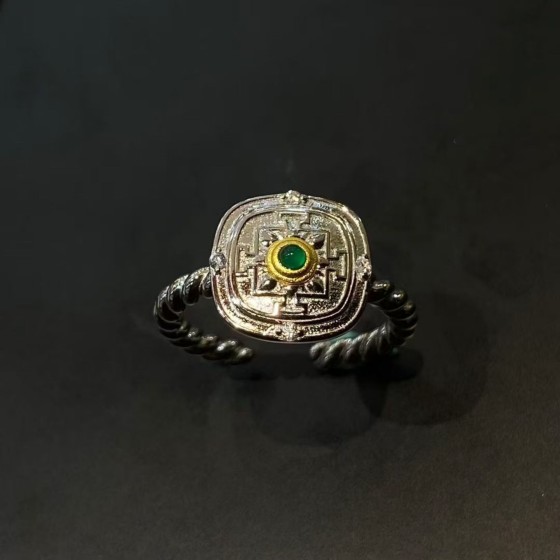
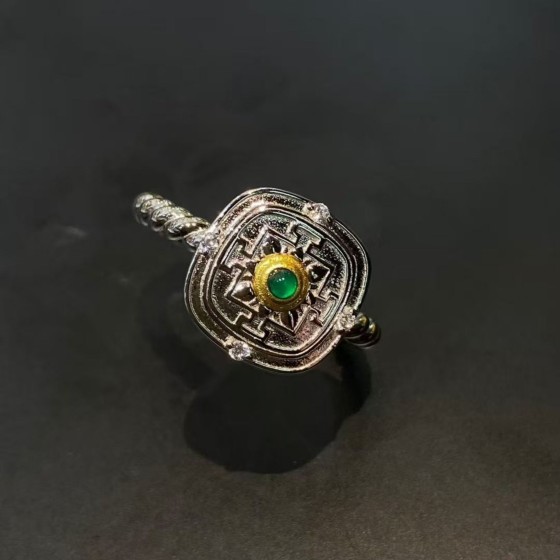
Tibetan Mandala Sterling Silver Adjustable Ring
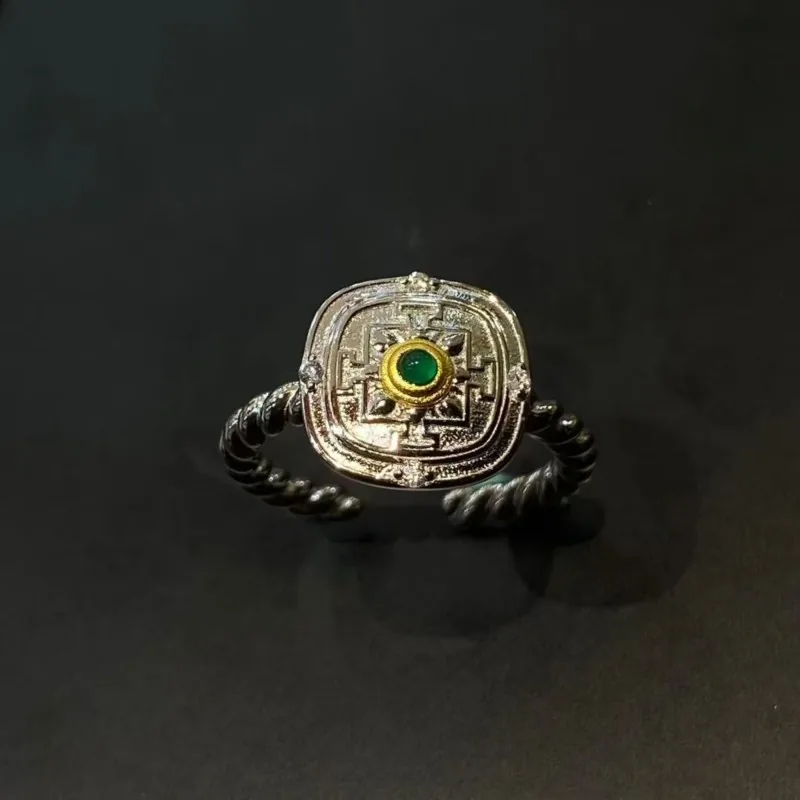
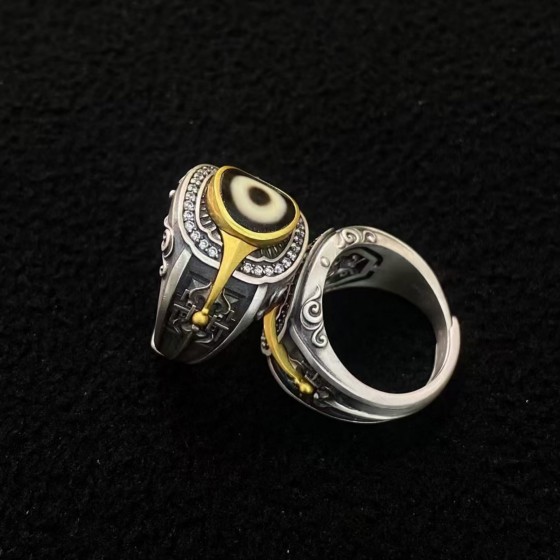
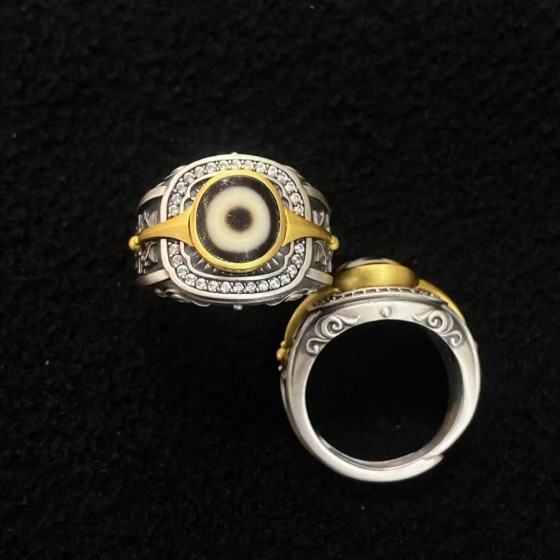
The Tibetan Mandala Sterling Silver Adjustable Ring is listed as S925 silver with a natural crystal accent and an open band. Its product page includes a video, useful for examining the raised details and side profile. Confirm the fit range before ordering.
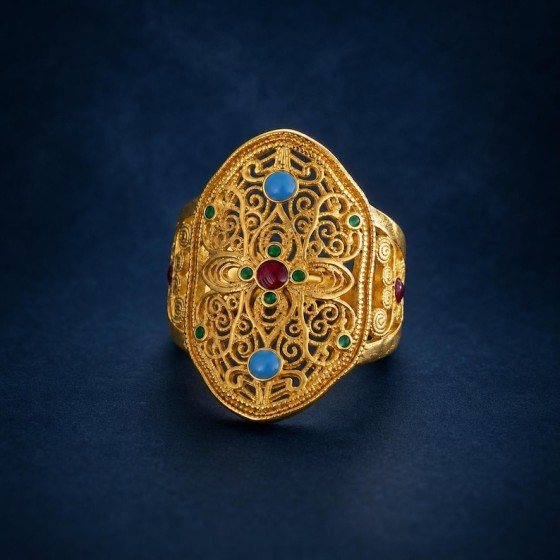
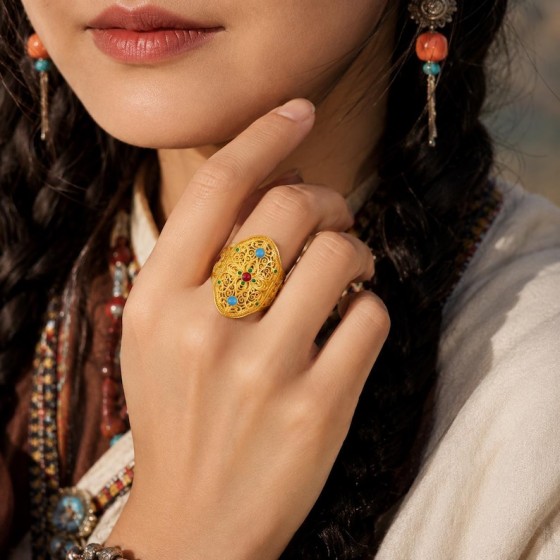
Gold-Tone Filigree Mandala Statement Ring
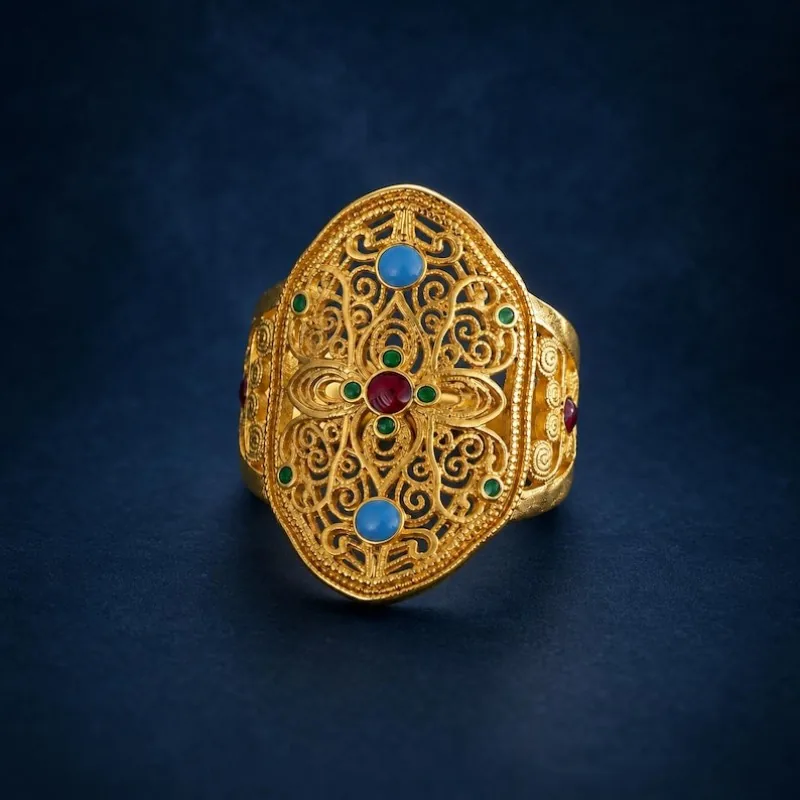
The Gold Filigree Mandala Statement Ring is listed as brass, with red, blue and green accents. The approximately 25 mm ring face gives it a bolder look. Its gold-tone appearance does not mean solid gold.
What to Check Before Buying
Check material, dimensions, ring size and construction before deciding. Adjustable bands still have limits, and a large ring face may feel different when typing or gripping objects.
- Compare close-up photos with the product’s name and description.
- Ask about alloy composition if you have known metal sensitivities.
- Check whether colored details are stones, enamel or another material; do not infer this from color.
- Read the adjustment and care instructions before bending an open band.
How to Care for Geometric Jewelry
Use a soft cloth after wear and store pieces separately. Remove jewelry before swimming or using cleaners. Fine openwork can catch on clothing, so handle it gently and avoid pulling at narrow sections. Follow the listing’s instructions for silver, brass, crystals and surface finishes.
Frequently Asked Questions
Is every circular pattern a Buddhist mandala?
No. A circular or floral design may simply be decorative. The maker’s explanation and the image’s context matter.
Are mandalas and endless knots the same symbol?
No. They have different structures and cultural uses, even when both appear in Tibetan-inspired jewelry.
Does a mandala ring guarantee balance or good luck?
No. Such meanings are symbolic. Choose a piece for its design, cultural connection and personal significance.
Can I give Buddhist-inspired jewelry to a non-Buddhist?
Consider the recipient’s interests and comfort with religious imagery. A clear explanation of the motif helps them make their own choice.
Explore KyLin Aura rings, read what a thangka is used for, or continue with the Eight Auspicious Symbols.