

What Is a Thangka Used For?
A thangka is a Tibetan Buddhist painting traditionally used for teaching, meditation, ritual display, and devotional practice. Today, thangka imagery also appears in pendants and Gawu boxes, giving people a portable way to keep a meaningful image close.
What Is a Thangka?
A thangka is usually a painted or embroidered scroll that shows a Buddha, bodhisattva, protector, mandala, or sacred symbol. The word is often linked with Tibetan scroll painting. Traditional thangkas follow iconographic rules, so the posture, color, hand gesture, and surrounding details all have meaning.
Unlike ordinary wall art, a thangka is made to be read slowly. The central figure, colors, offerings, animals, and symbols all point to a teaching or quality, such as compassion, wisdom, courage, healing, or protection.
How Thangkas Are Used in Practice
- Meditation focus: practitioners may rest their attention on the image to steady the mind.
- Teaching tool: thangkas help explain Buddhist stories, deities, mandalas, and symbolic systems.
- Home altar display: a thangka can mark a quiet place for reflection, prayer, or daily intention.
- Ritual object: in traditional settings, thangkas may be consecrated and used in ceremonies.
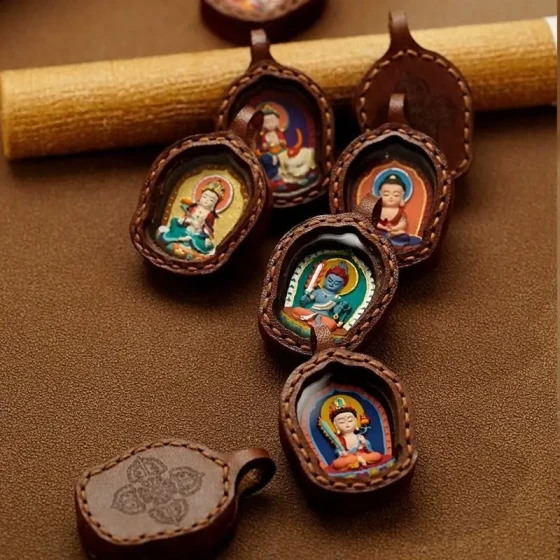
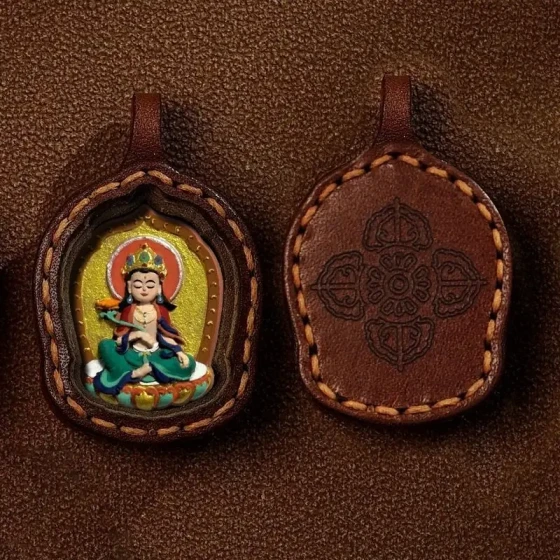
- Portable reminder: miniature thangka pendants and Gawu boxes bring the image into daily life.
Why Thangkas Help Meditation
A thangka supports meditation because it gives the mind a clear visual anchor. Instead of forcing the mind to become empty, the practitioner can return attention to the image, the breath, and the quality represented by the figure.
For example, Avalokiteshvara can remind the practitioner of compassion. Manjushri can point to clear wisdom. Green Tara can represent swift help and courage. The image does not do the practice for you, but it can make the practice easier to return to.
From Wall Painting to Wearable Thangka
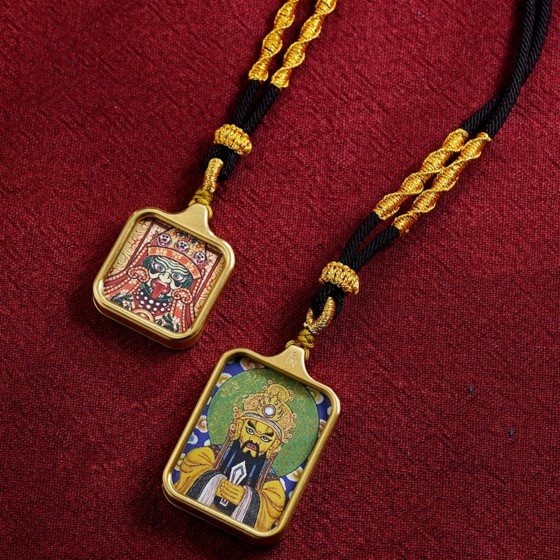
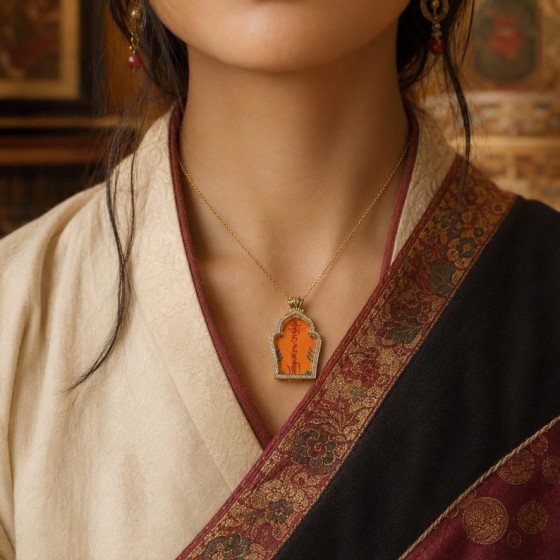
Traditional thangkas are often displayed in temples, monasteries, homes, and meditation spaces. Wearable thangka jewelry adapts this visual language into a smaller form, often inside a pendant or Gawu box.
A thangka pendant is best understood as a reminder rather than a replacement for a full thangka or formal practice. It can help the wearer carry a chosen quality through the day: steadiness, compassion, wisdom, healing, or protection.
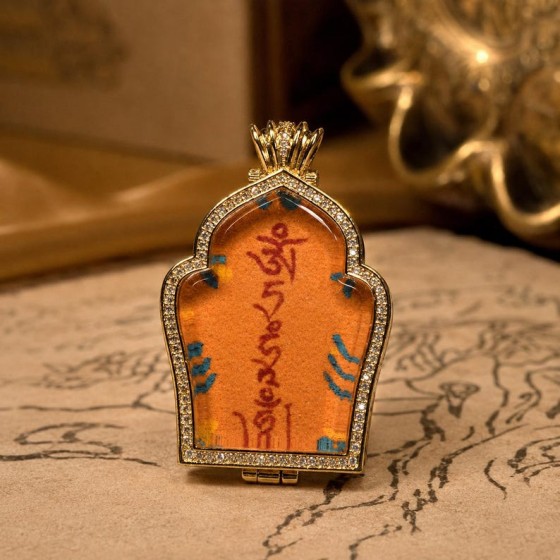
For a wearable example, see the KyLin Aura Hand-Painted Thangka Buddha Pendant (Ga Wu Box). It places thangka-inspired imagery inside a small pendant form, making it easier to carry the meaning of the image in daily life.
What Is a Thangka Pendant?
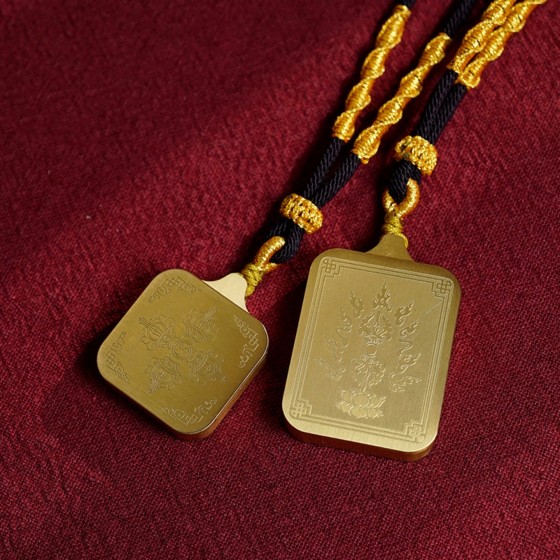
A thangka pendant is a small piece of jewelry that carries a miniature thangka image, usually a single Buddha, bodhisattva or protector such as Green Tara, Amitabha or Acala. The image may be hand-painted or printed and is often set behind glass or inside a metal gau box, so the wearer can keep the deity image close during the day.
How to Wear a Thangka Pendant
- Keep it above the waist. Many people wear a thangka pendant on a necklace near the heart, a traditional sign of respect for sacred images.
- Choose the chain length for daily comfort. A medium length lets the pendant rest flat without swinging into objects.
- Remove it for swimming, bathing and heavy exercise. Water and friction can damage painted surfaces and glass settings.
- Store it separately. When you take it off, place it in a clean pouch or box, not on the floor or in a cluttered drawer.
Browse thangka pendants and thangka necklaces to compare deity images and settings.
How to Choose a Thangka Image
Choose the image by meaning first. If you want compassion, Avalokiteshvara or Green Tara may fit. If you want clarity for study or decisions, Manjushri is a natural choice. For healing intentions, Medicine Buddha is often chosen. For courage and obstacle-clearing, Acala or Mahakala may be more suitable.
Look for clear artwork, respectful product descriptions, and a design you will actually wear or display. A thangka object works best when it feels personal enough to become part of your routine.
FAQ
Is a thangka only for Buddhists?
Traditional thangkas belong to Buddhist practice, but many people respectfully appreciate thangka art as a reminder of compassion, wisdom, and mindfulness.
Can I wear a thangka pendant every day?
Yes, if the design is comfortable and you treat the image respectfully. Many people wear one as a daily reminder.
Where should I place a thangka at home?
Place it somewhere clean and calm, such as a meditation corner, shelf, or quiet room. Avoid careless placement on the floor or in cluttered areas.
What does a thangka pendant mean?
Its meaning comes from the deity it shows. Green Tara is linked with compassion and swift help, Amitabha with infinite light and rebirth in the Pure Land, and Acala with steadiness in the face of obstacles. Check the product description to confirm which figure is depicted.
Ready to choose one? Our thangka pendant guide explains the types, how to judge quality, and how to wear and care for a thangka pendant.
Own a thangka pendant? Our thangka jewelry care guide explains cleaning, storage and what to avoid.