White Tara Meaning: Symbolism, Mantra & Jewelry Guide
White Tara is a female Buddhist deity associated with compassion, serenity and long life. She is one of the best-known forms of Tara in Tibetan Buddhism and often appears in thangka paintings, prayers and jewelry. This guide explains her main symbols, how her mantra is traditionally used, and what to look for if you are choosing a White Tara pendant or mala.
Who Is White Tara?
Tara is a family of enlightened female figures in Tibetan Buddhism. She is commonly described as a swift, compassionate helper who responds to the suffering of others. The best-known forms are Green Tara and White Tara; many Tibetan practitioners also know a set of Twenty-One Taras.
White Tara is especially associated with compassion, healing and longevity. In many traditions she is also called the Wish-Fulfilling Wheel form because she holds a wheel-like emblem in some depictions. Details vary between lineages, so the description of one painting may not match another. Treat any single summary, including this one, as an introduction rather than a complete account.
White Tara vs. Green Tara
The two forms are closely related, but they are usually emphasized for different reasons.
| Feature | White Tara | Green Tara |
|---|---|---|
| Color | White, often with a calm, serene expression | Green, often shown ready to rise or step forward |
| Common associations | Compassion, healing, long life | Swift help, protection from fear and obstacles |
| Typical posture | Seated in meditation posture on a lotus | Seated with one leg extended, ready to act |
If you are interested in the green form, read our Green Tara guide.
What Do the Seven Eyes and the Lotus Mean?
White Tara is often described as having seven eyes: two on the face, one on the forehead, and one on each palm and sole. A common explanation is that they represent attentiveness to beings in all situations. Different teachers explain the symbolism in different ways, so look for the source of any interpretation.
The lotus is a general Buddhist symbol of purity arising from difficult conditions. A lotus seat or a lotus held in the hand does not by itself identify a particular figure, but in a White Tara image it supports the themes of compassion and clarity. Hand gestures also carry meaning; our guide to Buddhist mudras explains how to read them in thangka art and jewelry.
What Is the White Tara Mantra?
The mantra most often associated with White Tara is:
Om Tare Tuttare Ture Mama Ayuh Punya Jnana Pushtim Kuru Svaha
Traditionally, the long-life form of the mantra is recited with the intention of supporting health, merit and wisdom. Pronunciation and the exact wording differ by lineage and language, and formal practice is often learned from a qualified teacher. If you recite a mantra only as a personal reflection, you can still approach it respectfully by learning what the words mean and avoiding it as a promise of results.
A mala can be used to count recitations. If you are new to using one, our guide on how to use mala beads covers holding, counting and everyday use.
Why Do People Wear White Tara Jewelry?
For many wearers, a White Tara pendant is a personal reminder of compassion, patience and care for family and friends. It is not a medical item and it does not guarantee health or long life. A better way to think about it is as a visible prompt: to slow down, breathe, or check in on someone.
Some people choose it as a gift for a parent, a caregiver, or someone recovering from illness. If you give it, write a short note explaining that the piece is meant as a gesture of care and not as a promise of any outcome.
White Tara Pieces to Compare at KyLin Aura
The products below take different approaches to Tara imagery. Compare the actual materials, dimensions and photos on each product page before deciding.
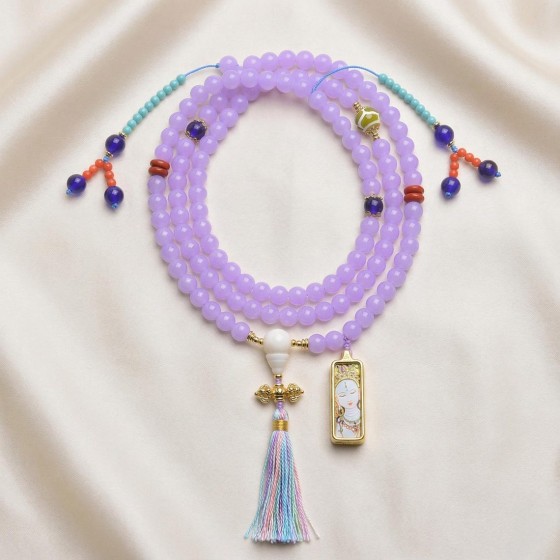
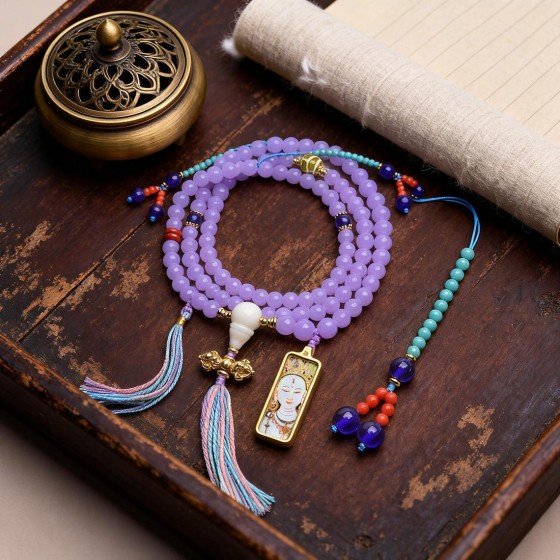
Natural Purple Agate 108 Mala Necklace with White Tara Pendant
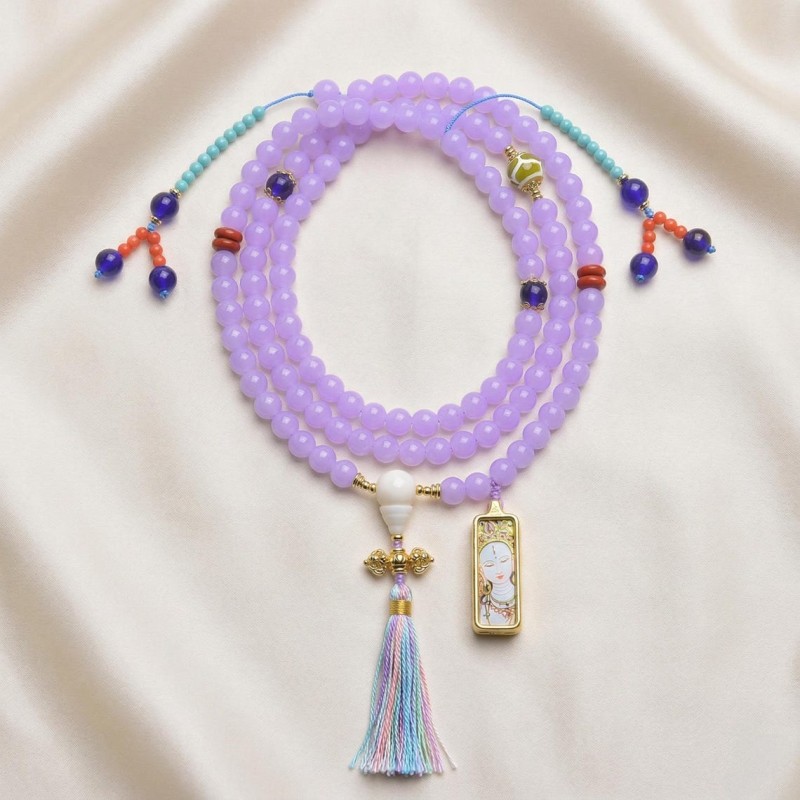
The Natural Purple Agate 108 Mala Necklace combines a 108-bead string with a White Tara pendant and a tassel. It suits someone who wants a mala for meditation counting as well as a Tara image. Check the product page for bead size and length.
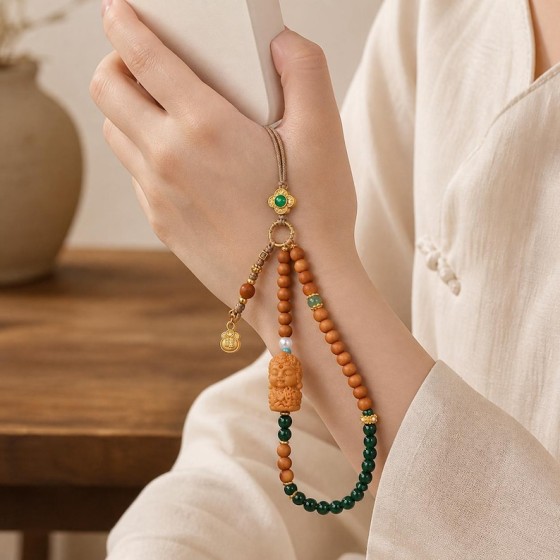
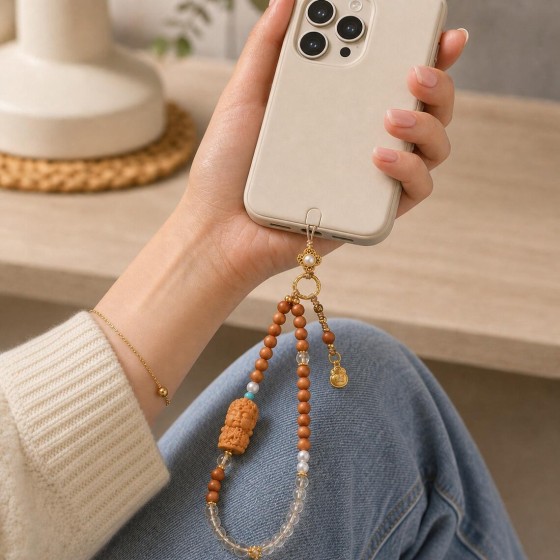
Green & White Tara Agarwood Phone Wrist Strap
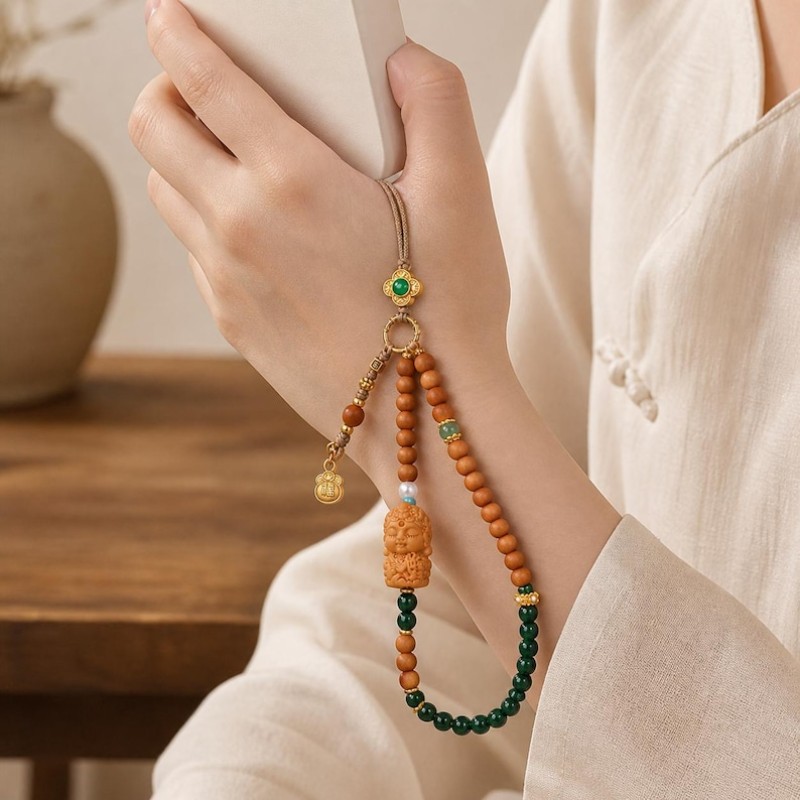
The Green & White Tara Phone Wrist Strap pairs both forms on a practical accessory with agarwood-scented wooden beads. It is a lighter, everyday option for someone who prefers not to wear a necklace.
Tibetan Natural Turquoise Nugget Hoop Earrings
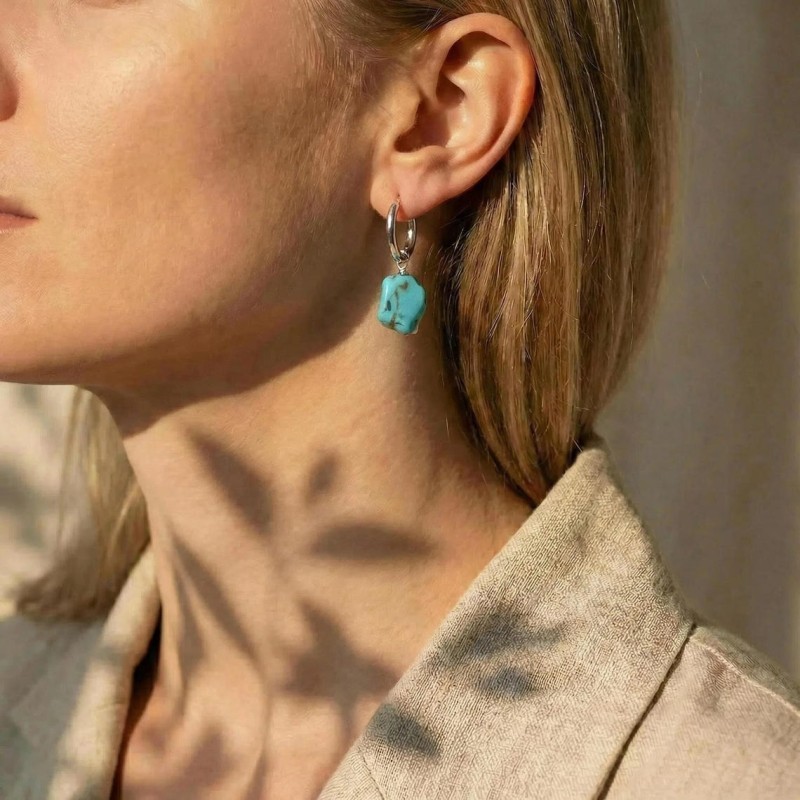
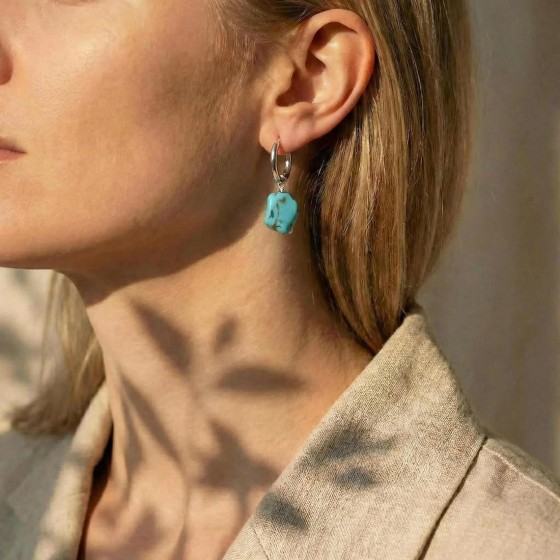
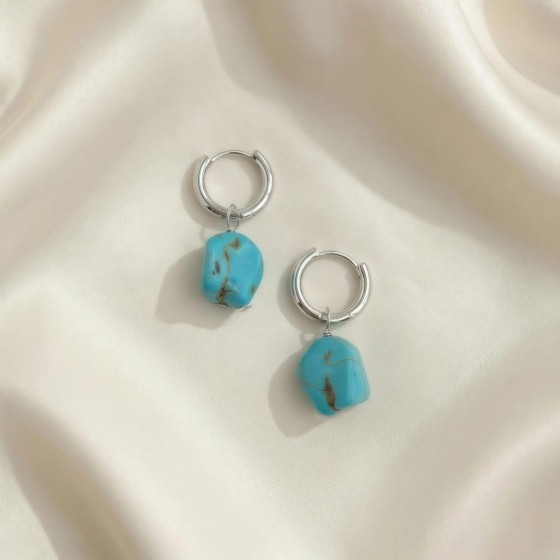
The Tibetan Natural Turquoise Nugget Hoop Earrings are Tara-inspired rather than a depiction of White Tara. They use raw turquoise stones on copper hoops, so each stone differs slightly in shape and color.
Green Tara Thangka Pendant Necklace
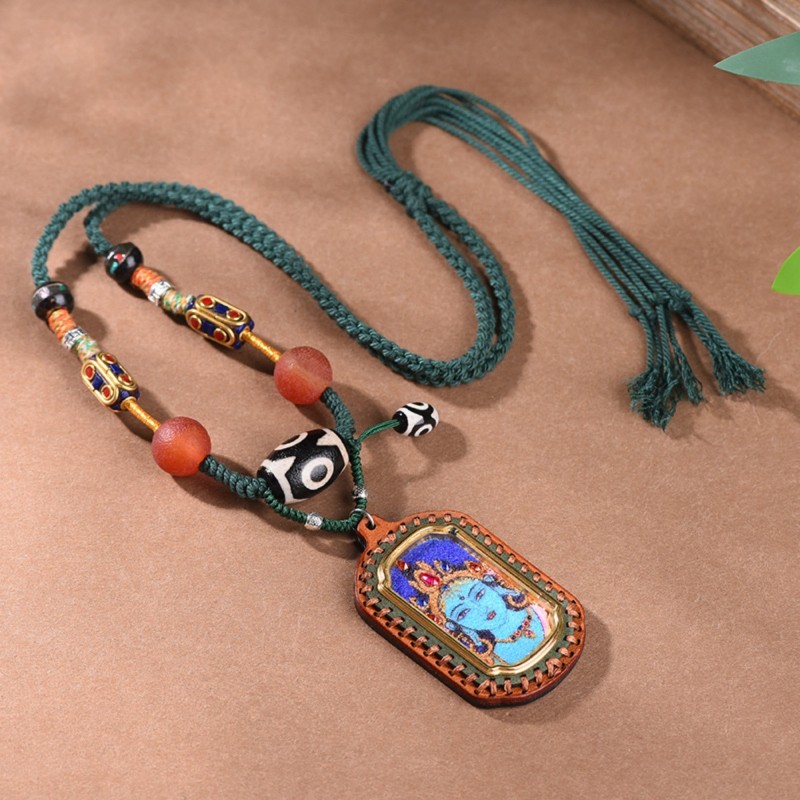
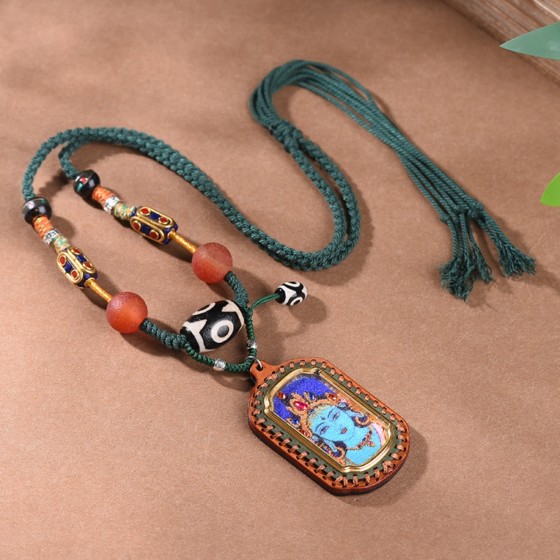
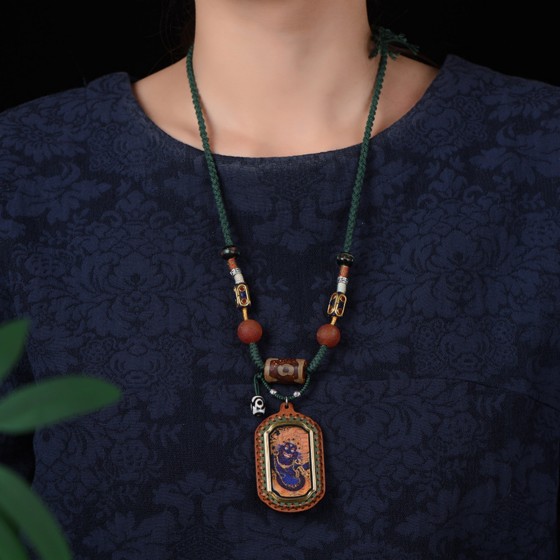
If you want a painted thangka-style image, the Green Tara Thangka Pendant Necklace shows the green form in a gold-toned frame. To understand what a thangka is, see What Is a Thangka Used For?
How to Choose a Respectful White Tara Pendant
- Look at the figure: a White Tara image usually shows a seated, serene figure, often with a lotus. If the seller does not say which Tara is shown, ask.
- Check the material and size from the product page rather than relying on a color name alone.
- Choose a design that matches how you will use it: a pendant for daily wear, a mala for counting, or a small charm for a bag or phone.
- Keep sacred images in a clean place and avoid wearing them in settings you would consider disrespectful, such as a bathroom.
Frequently Asked Questions
Is White Tara the same as Green Tara?
They are two forms of Tara. They share a compassionate nature but are depicted with different colors and are often associated with different themes.
Do I have to be Buddhist to wear a White Tara pendant?
No. Many people wear religious imagery because it has personal meaning. It is considerate to learn what the image represents and to treat it with respect.
Does a White Tara pendant protect health or extend life?
No. In Tibetan Buddhism White Tara is associated with healing and long life, but a piece of jewelry is a symbol and a reminder, not a medical treatment or guarantee.
Can I recite the White Tara mantra without training?
Many people recite mantras as a personal reflection. For formal practice, empowerment and pronunciation, it is best to learn from a qualified teacher.
Browse more mala beads, explore the Tibetan thangka collection, or read about Avalokiteshvara, the bodhisattva of compassion often linked with Tara in Tibetan stories.