

Can a Non-Buddhist Wear a Buddha Necklace?
Many non-Buddhists wear Buddha necklaces as reminders of compassion, awareness or an interest in Buddhist art. Wearing one does not make you Buddhist or replace religious practice. There is no single answer that speaks for every Buddhist community: learn what the image represents, handle it thoughtfully, and follow local guidance when visiting religious places.
Is Wearing a Buddha Necklace Disrespectful?
Not necessarily. Context, intention and treatment matter, and individuals may disagree. Appreciating a religious image is different from using it as a joke or presenting it as a guaranteed source of luck. A shop cannot grant permission on behalf of an entire religion.
If a friend, teacher or host explains a local custom, listen rather than assuming that your own interpretation applies everywhere. You can also decide not to wear a religious image and choose a non-figurative design instead.
Know Which Figure You Are Wearing
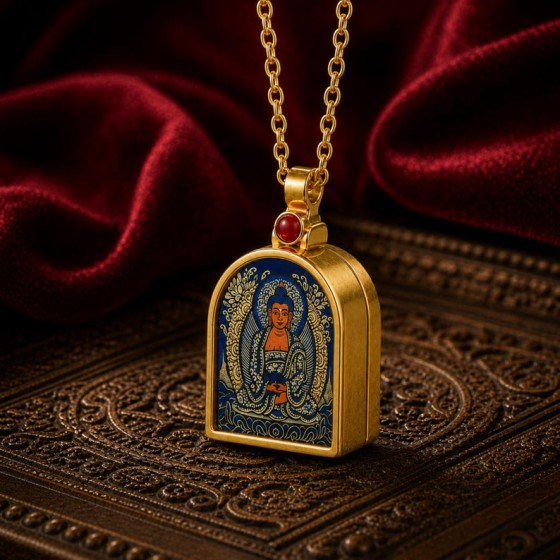
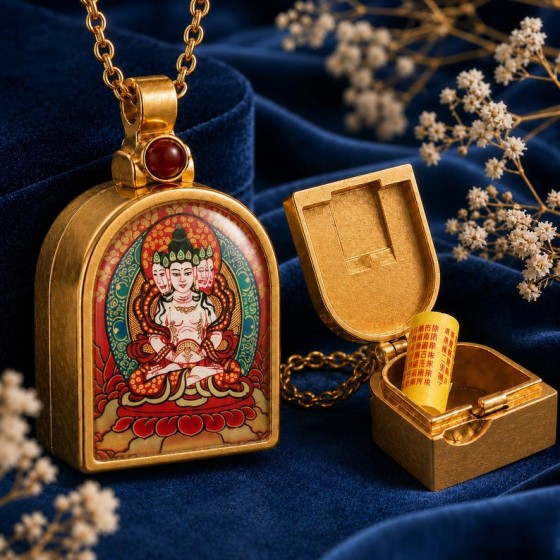
“Buddha necklace” is a broad retail phrase, not an identification of every figure. Amitabha is a Buddha; Green Tara and Avalokiteshvara are different figures with their own traditions. A thangka is a form of painting, while a gawu is a portable shrine or prayer box. These names describe different aspects of a pendant.
Start with the seller’s named figure and a clear photograph. Read our Buddha necklace meaning guide, then use a figure-specific introduction such as Amitabha Buddha. If the listing is unclear, ask before ordering.
Practical Habits for Respectful Daily Wear
Keep the piece clean and secure, and treat the image as something meaningful rather than disposable decoration. Some wearers keep a pendant under clothing; others wear it visibly. Neither choice establishes a universal rule for everyone.
| Situation | Practical approach |
|---|---|
| Temple or religious event | Follow the host’s dress and conduct guidance; ask if unsure. |
| Showering, swimming or exercise | Remove delicate painted or mixed-material jewelry to protect it. |
| Not wearing the necklace | Place it in a clean, dry pouch or box rather than leaving it on the floor. |
| Bathroom or bedtime | Some people remove sacred images in these settings; customs differ. Choose a clean storage place. |
Care advice and religious etiquette are not the same thing. Taking a painted pendant off before a shower protects its materials; it does not imply that every Buddhist tradition has an identical bathing rule. Consult a teacher from the relevant tradition for specific practice questions.
Choose Meaning Before Marketing Claims
Choose a figure you can name and a reason for wearing it that you can explain honestly. A reminder to pause before reacting is a personal use; a promise that a necklace will prevent harm is an unsupported claim. Jewelry does not guarantee protection, wealth or health.
- Confirm the image-making method: hand-painted, printed or another technique.
- Check the frame material, pendant dimensions, chain length and weight.
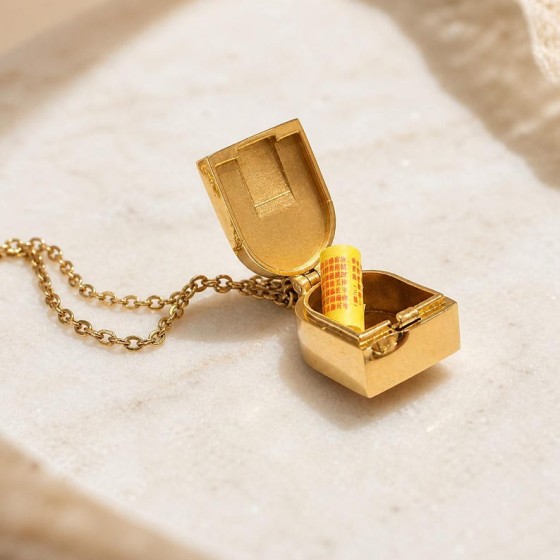
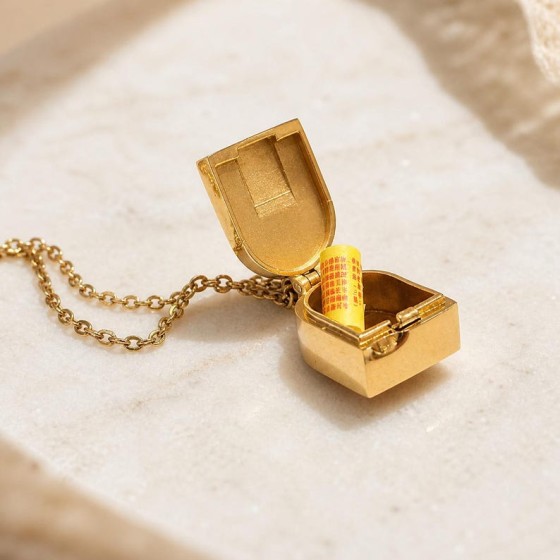
- For a prayer box, confirm whether it is designed to open. Do not force a sealed compartment.
- Use close-up photos or a product video to examine the bail, edges and finish.
Two KyLin Aura Pendants to Compare
Blue Amitabha Thangka Prayer Box Necklace
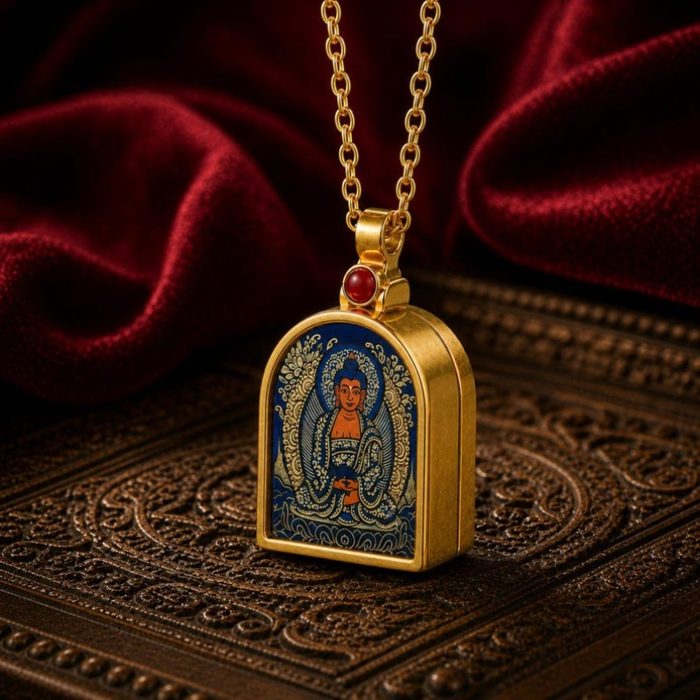
The Blue Amitabha Thangka Prayer Box Necklace gives you a named Buddha image to learn about before choosing. Its product page includes a video, useful for comparing the front, profile and opening mechanism. Check the current size and care details rather than assuming all prayer boxes are alike.
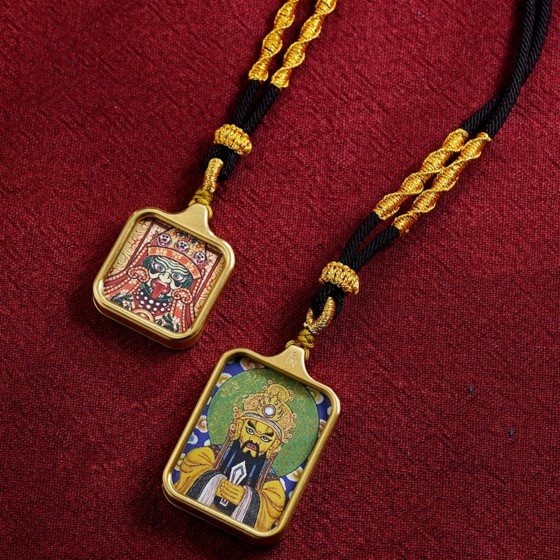
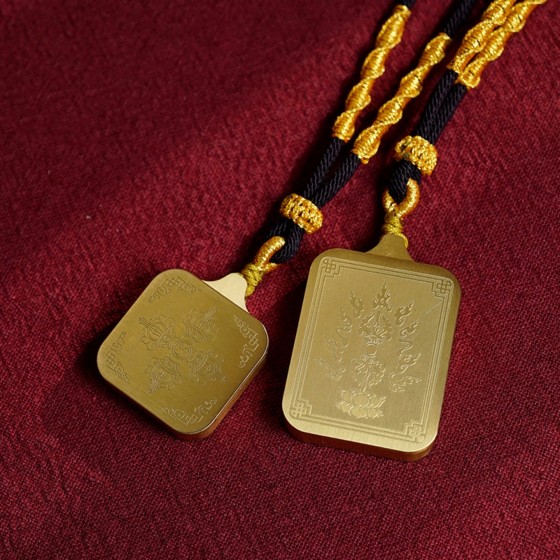
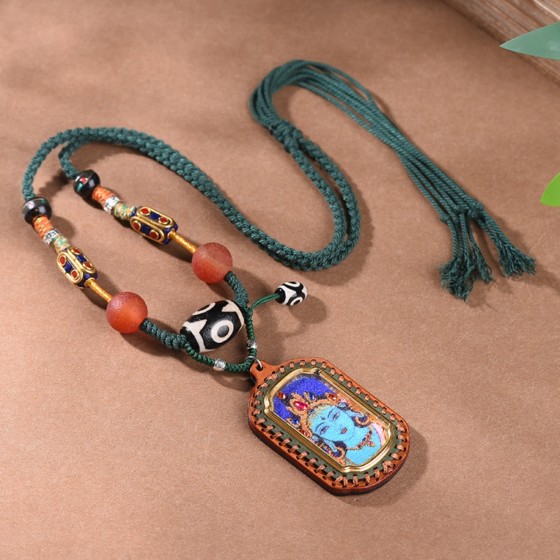
Hand-Painted Tibetan Thangka Pendant Necklace
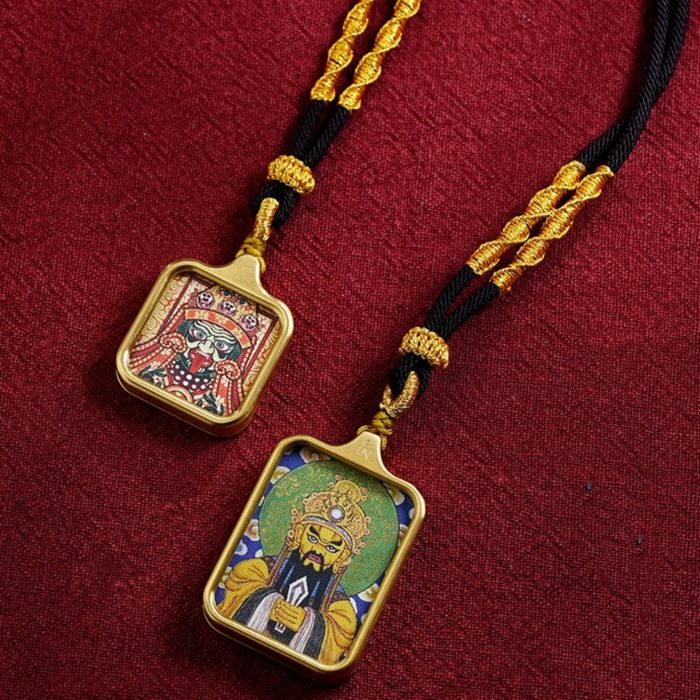
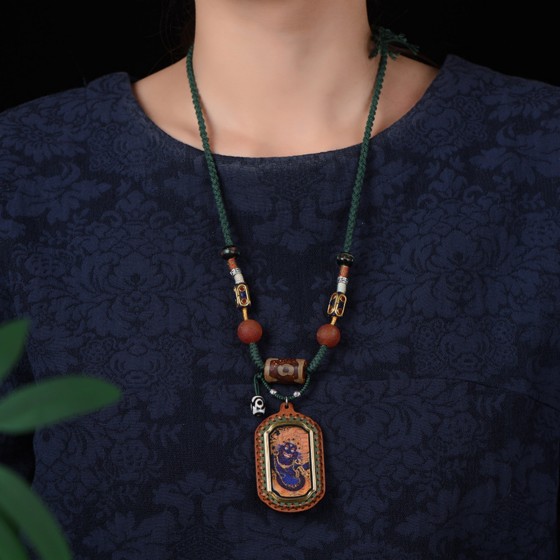
The Hand-Painted Tibetan Thangka Pendant Necklace is another format to compare. Confirm the figure shown in your selected option, not only the overall product name. For background on the artwork, read what thangkas are used for.
Giving a Buddha Necklace to a Non-Buddhist
Ask whether the recipient is comfortable wearing religious imagery. Interest in meditation does not automatically mean someone wants a Buddha pendant. Include a short description of the named figure and the care instructions, without promising spiritual results or implying a religious commitment.
Frequently Asked Questions
Do I need to convert before wearing a Buddha necklace?
Wearing a necklace is not conversion. Many non-Buddhists wear one, but respectful treatment and awareness of local customs still matter.
Does a pendant need to be blessed?
Do not assume every necklace requires the same ritual. If you want to use it within a religious practice, ask a qualified teacher from that tradition. A seller’s description alone does not establish consecration.
Can I wear it just because I like the art?
Appreciating the art can be a starting point. Learn the figure’s name and context, and be open to concerns from people for whom it is sacred.
Can I sleep or shower in it?
Check the maker’s instructions. Removing delicate pendants helps avoid water exposure, snagging and damage; religious customs may add other considerations.
Browse Tibetan thangka pendants, compare styles in our thangka pendant guide, and read thangka jewelry care before making a choice.