


Acala’s Sword and Mantra: Symbolism, Protection, and Everyday Practice
Acala, known in Japan as Fudō Myō-ō and in Chinese as Budong Mingwang, is recognized by his fierce expression, sword, rope, and surrounding flames. These details are not an invitation to aggression. Within Buddhist imagery, they express determined compassion: the resolve to confront confusion and remain steady when difficulties arise.
This guide explores the meaning of the Acala sword, the place of mantra in devotional practice, and respectful ways to approach an Acala pendant. Protection here is a traditional spiritual association, not a promise of immunity from harm.
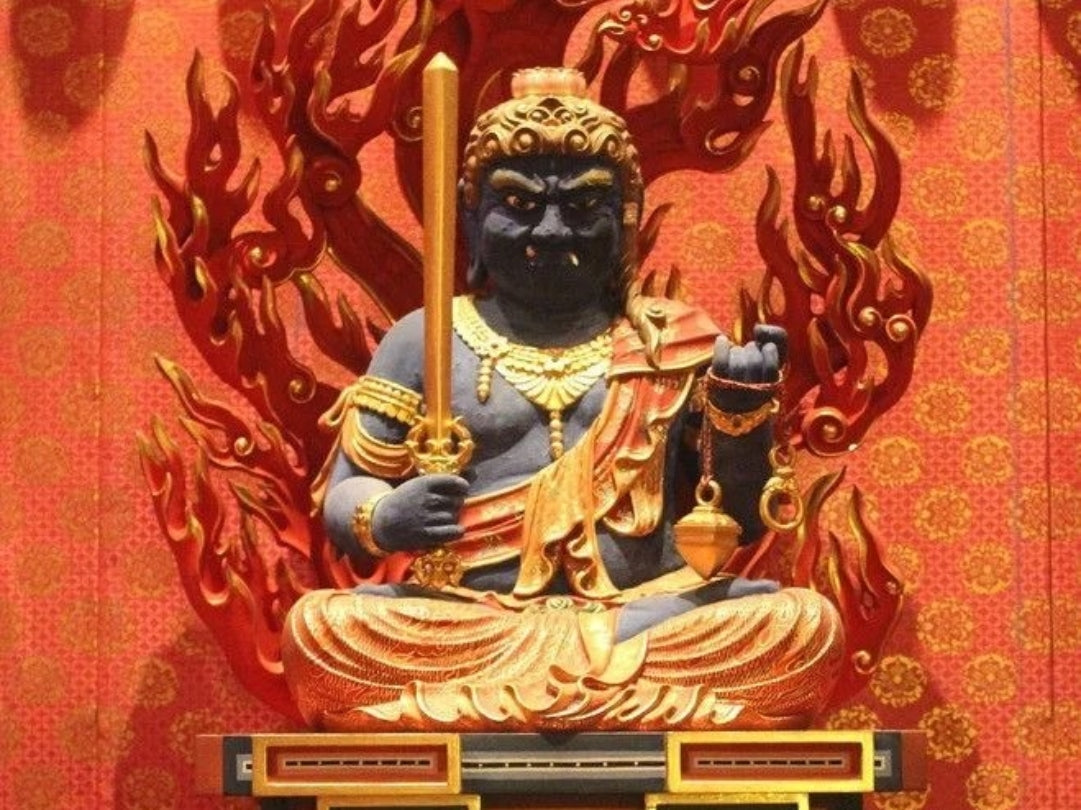
Who Is Acala?
The name Acala is commonly translated as “the Immovable One.” His imagery invites reflection on steadfastness: remaining committed to wisdom and compassion rather than being pulled in every direction by fear or distraction. The details of his appearance and practice vary across Buddhist traditions.
For further context, read KyLin Aura’s Acala / Fudo Myo-o symbolism and thangka pendant guide.
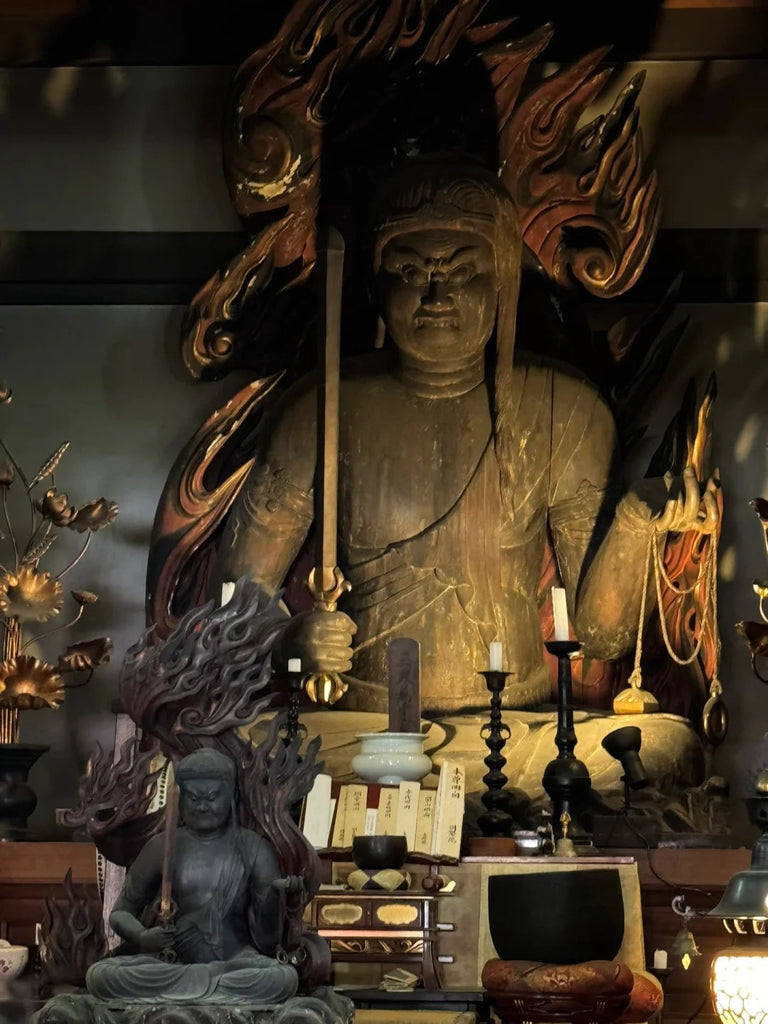
What Does Acala’s Sword Represent?
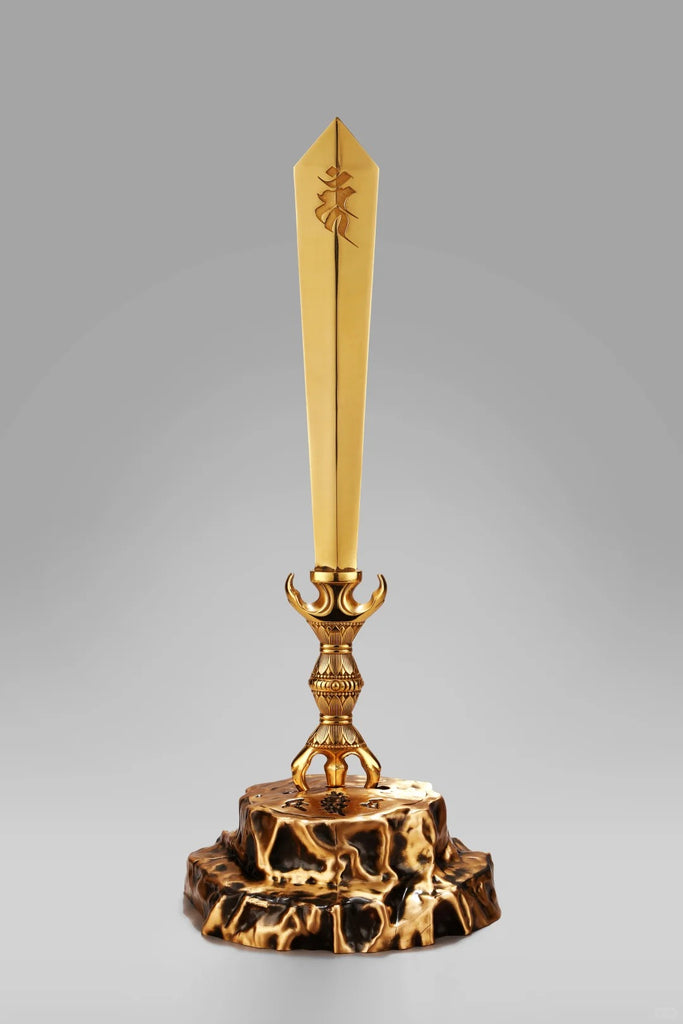
The sword is a teaching symbol as well as a ritual attribute. Its cutting action is directed toward ignorance and attachment, not toward ordinary people.
- Wisdom: The blade represents discerning what is helpful and cutting through delusion.
- Resolve: It suggests decisive action guided by compassion rather than impulsive anger.
- Transformation: Together with the flames, it evokes the removal of obstacles to clear understanding.
The rope provides a complementary image: restraining disruptive forces or habits. Sword and rope together suggest both clarity and discipline. A sword-shaped charm alone, however, is not enough to identify an image as Acala.
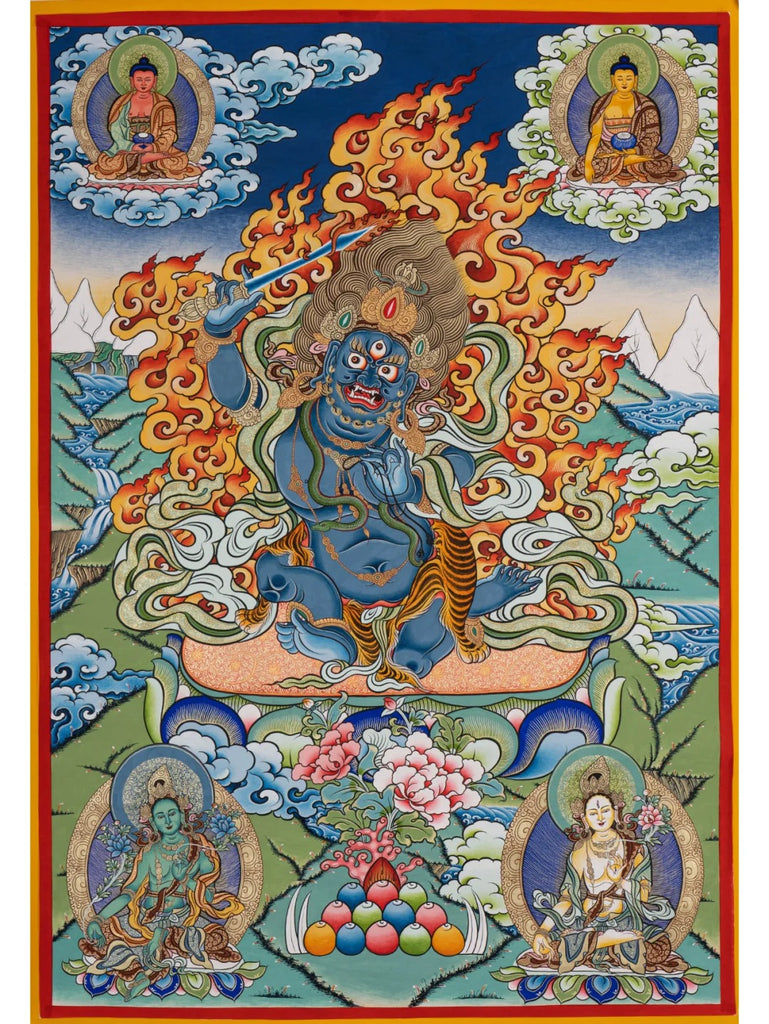
The Acala Mantra: Devotion Rather Than Guaranteed Results
Practitioners may associate mantra recitation with steadier attention, courage, and protection. These meanings belong to a religious context; they should not be presented as proven medical benefits or guaranteed changes in health, work, or relationships.
- Attention: Repetition can provide a point of return during a devotional practice.
- Commitment: Recitation may express the intention to meet difficulties without abandoning compassion.
- Tradition: Some practices form part of a wider ritual and should be learned through the relevant teacher or community.
Wording, pronunciation, and practice requirements differ between lineages. This article does not prescribe a mantra formula or replace instruction. If you are unfamiliar with the tradition, a quiet pause and an intention such as “May I act with clarity and care” are a simple non-ritual alternative.
From Sacred Image to Wearable Pendant
Miniature paintings, sculpted figures, and shrine-style settings bring sacred imagery into a small format. A gawu or prayer-box design may frame an image or hold devotional material, but not every pendant opens or includes sacred contents. Check the individual product description rather than assuming a ritual function from the name.
The sword motif can also appear in a small art locket. The product image below shows the sword-compartment necklace pairing already featured in our earlier articles.
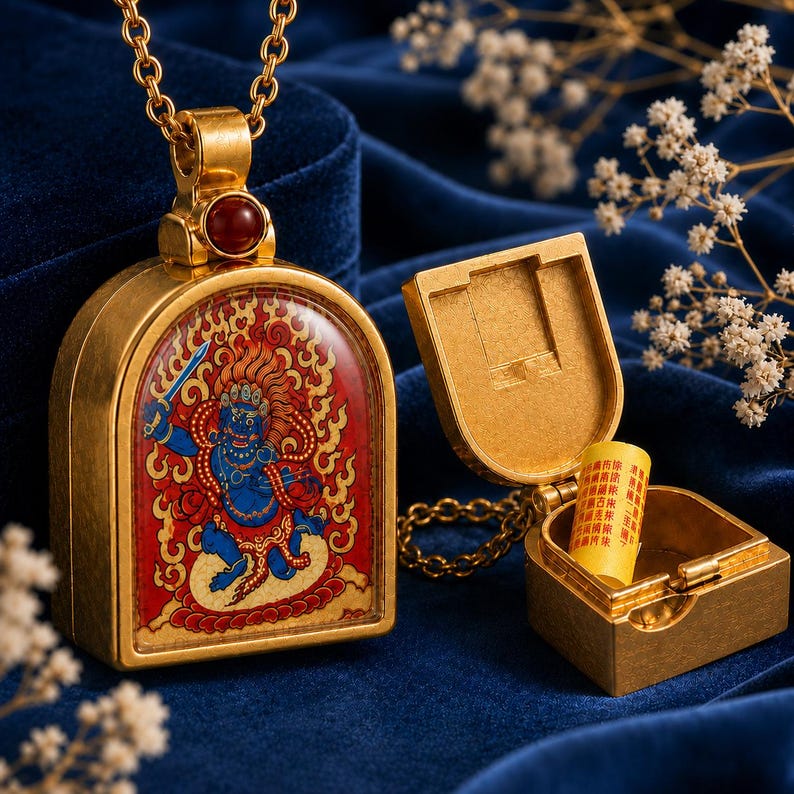
Secret Compartment Necklace, Sword Miniature Art Locket, Courage Keepsake Gift
The second product image presents a hand-painted white-copper thangka pendant. The linked product offers several sacred-image options, including Acala; confirm the selected design on the product page before ordering.
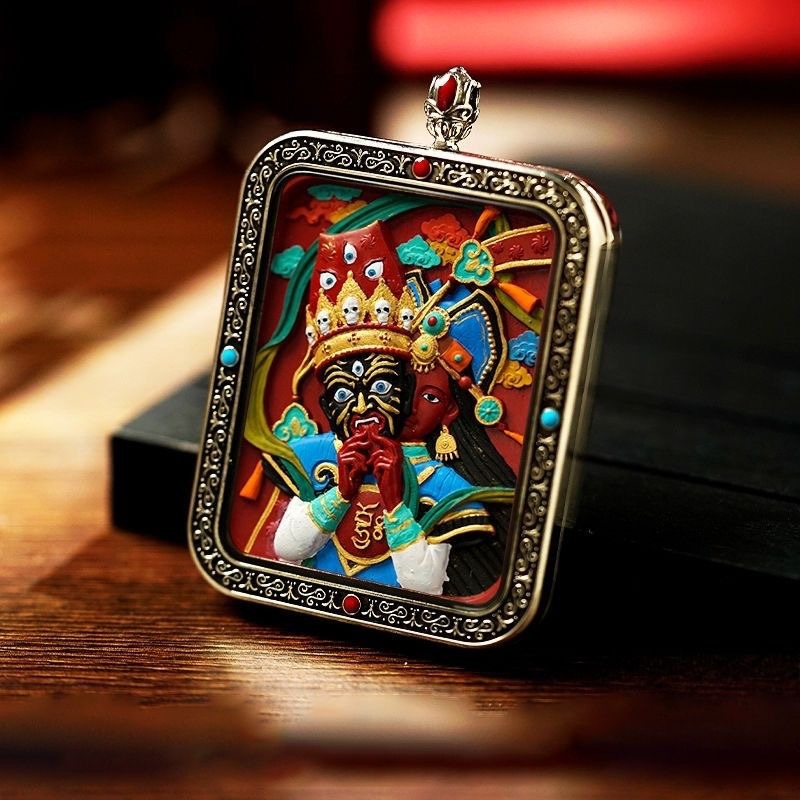
KyLin Aura Hand-Painted Thangka Cinnabar White Copper Pendant Necklace (Ga Wu Box)
Choose by imagery, construction, and wearing comfort, not a promised level of protection. Neither a product title nor a video establishes that an item has been consecrated.
Three Practical Ways to Make the Symbol Meaningful
- Choose one intention. Use the pendant as a reminder of patience, courage, or careful attention.
- Pause before reacting. Before a difficult conversation, briefly notice the pendant and decide how to respond thoughtfully.
- Connect reflection to action. Follow the pause with one concrete step, such as listening fully or completing a postponed task. Follow your teacher’s guidance if you also maintain a devotional practice.
The object can serve as a personal reminder; the practical work remains in your choices and behavior.
Respectful Wearing and Care
- Learn the imagery. Understand why a wrathful appearance can express compassion within its religious setting.
- Follow the relevant tradition. Customs about sacred objects vary. Ask your teacher about consecrated items rather than treating one rule as universal.
- Protect the artwork. Follow the product’s care instructions and avoid moisture, friction, or cleaning chemicals that could damage miniature paintings and their settings.
- Consider physical safety. Remove necklaces during activities where chains or pendants could catch or cause injury.
Frequently Asked Questions
Is Acala the same as Fudō Myō-ō?
Fudō Myō-ō is the Japanese name associated with Acala. Depictions and practices still vary by tradition.
Does wearing an Acala pendant guarantee protection?
No. It may have devotional or personal significance, but it does not replace practical safety measures or professional care.
Do I need to recite a mantra to wear the pendant?
Wearing a piece of jewelry does not automatically require a specific practice. For a consecrated or lineage-specific object, follow the guidance given with it.
How should I choose an Acala pendant?
Look for clearly identified imagery, transparent material descriptions, suitable dimensions, and care instructions. Confirm the selected design before ordering.
Steadiness Guided by Compassion
Acala’s sword offers a direct question for daily reflection: what confusion can I let go of, and what wise action can I take? Approached respectfully, the image can remind you to meet difficulties with courage without losing care for others.