

The History and Evolution of Tibetan Buddhist Jewelry
Tibetan Buddhist jewelry brings together cultural heritage, spiritual symbolism, and handcraft. Over centuries, it moved from simple bone and stone adornment toward pendants, malas, and thangka pieces that many people still wear today.
Ancient Origins
Early Tibetan adornment often used bone, stone, and shell. These pieces were decorative, but they could also mark social status or carry protective meaning in local belief.
When Buddhism spread to Tibet in the 7th century, jewelry began to reflect sacred imagery and practice. Design slowly shifted from simple ornament toward objects that could carry Buddhist meaning close to the body.
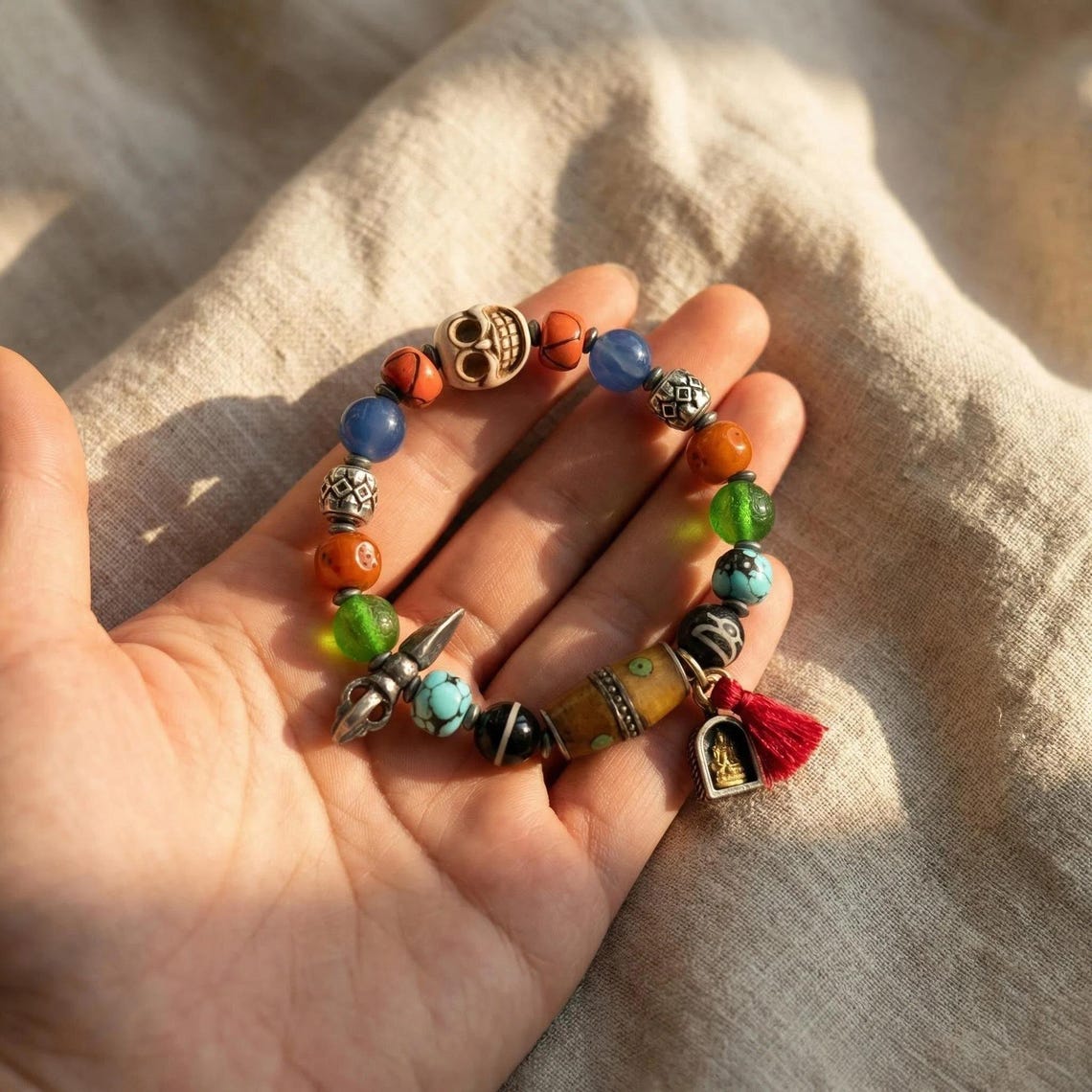
How Buddhism Shaped the Designs
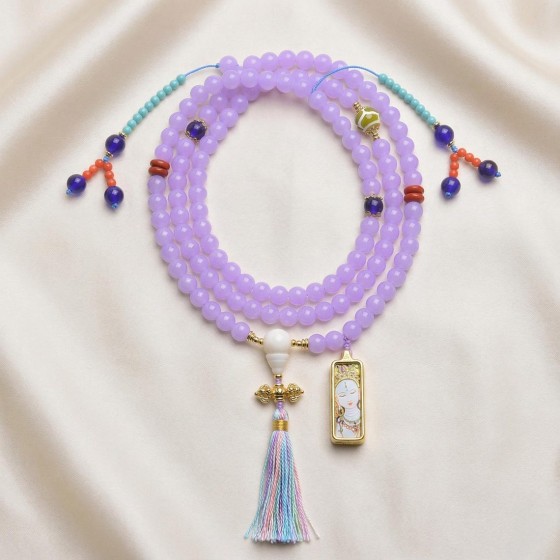
As Buddhism shaped Tibetan culture, jewelry increasingly incorporated religious symbols. The eight auspicious symbols—the endless knot, lotus, conch shell, and others—became common motifs. In tradition, they are associated with blessings, protection, and auspicious meaning.
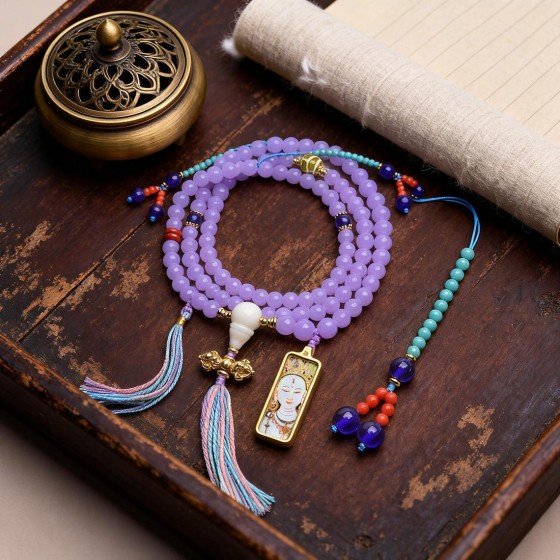
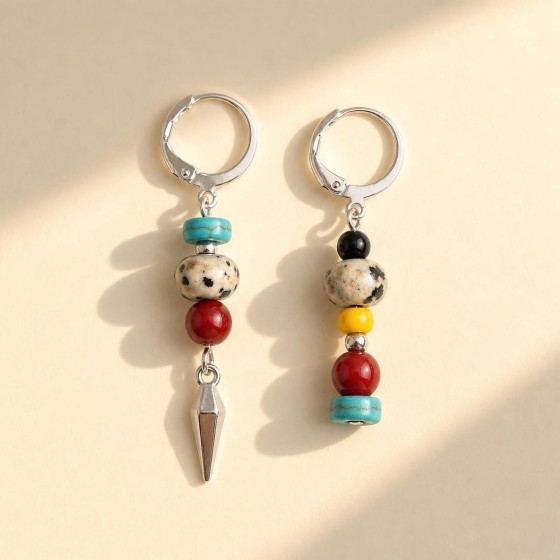
Sacred materials also became central. Turquoise, coral, and agate appear often in Tibetan jewelry. In Tibetan and Himalayan culture, they are traditionally linked with vitality, protection, and auspicious symbolism rather than decoration alone.
Craftsmanship and Materials
Tibetan artisans are known for detailed metalwork. Traditional techniques include filigree, repoussé, and engraving on gold, silver, and copper. These methods allow fine patterns, deity motifs, and symbolic details to appear on rings, pendants, and amulet boxes.
Over time, materials have broadened. Precious metals and natural stones remain important, but contemporary Tibetan-inspired jewelry may also use stainless steel, mixed alloys, or synthetic stones to suit different budgets and daily wear needs.
Why These Pieces Still Matter
Throughout its history, Tibetan Buddhist jewelry has been more than an accessory. For many wearers, it expresses cultural identity and spiritual intention. A pendant, mala, or amulet can reflect faith, aspiration, or remembrance.
Some pieces are passed down through families, carrying personal memory as well as traditional association. That continuity helps explain why Tibetan jewelry still resonates beyond short-lived fashion trends.
How Tibetan Jewelry Looks Today
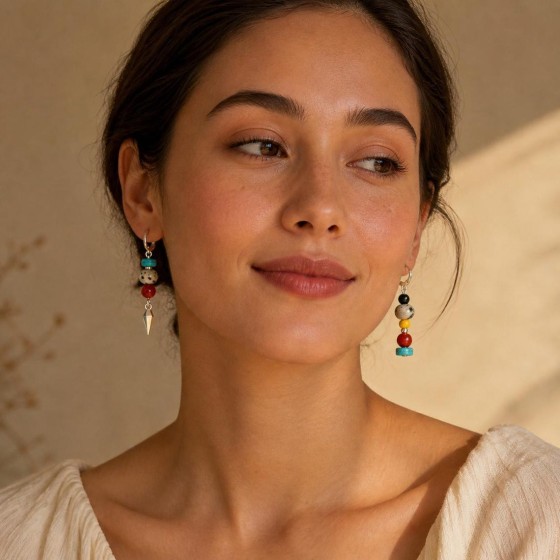
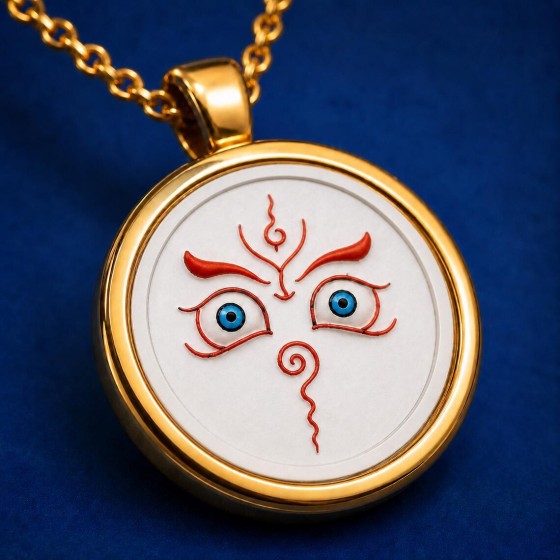
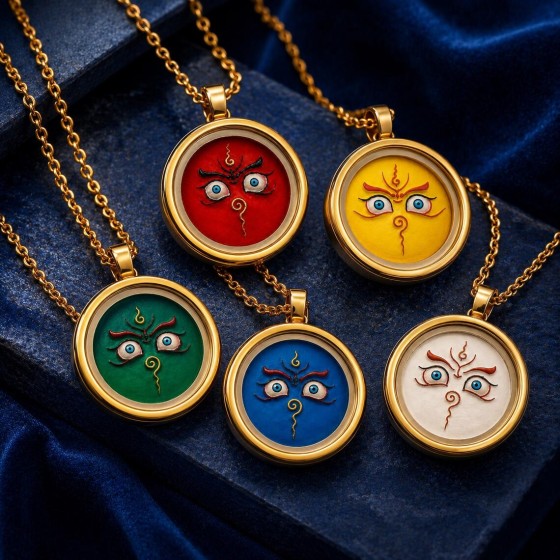
In recent years, Tibetan Buddhist jewelry has reached a wider global audience. Designers adapt traditional motifs into smaller pendants, bracelets, and necklaces that fit modern wardrobes while keeping symbolic elements visible.
Interest in mindfulness, meditation, and meaningful gifting has also brought these pieces to new wearers. Many people now choose them because they want jewelry with story, craft, and intention—not only appearance.
FAQ
What is the oldest form of Tibetan jewelry?
Early Tibetan adornment often used natural materials such as bone, stone, and shell. Buddhist symbols and metal craftsmanship developed more fully after Buddhism became established in Tibet.
What symbols appear most often in Tibetan Buddhist jewelry?
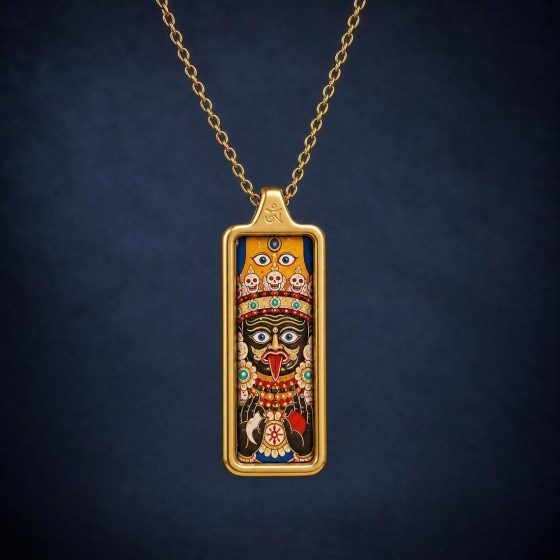
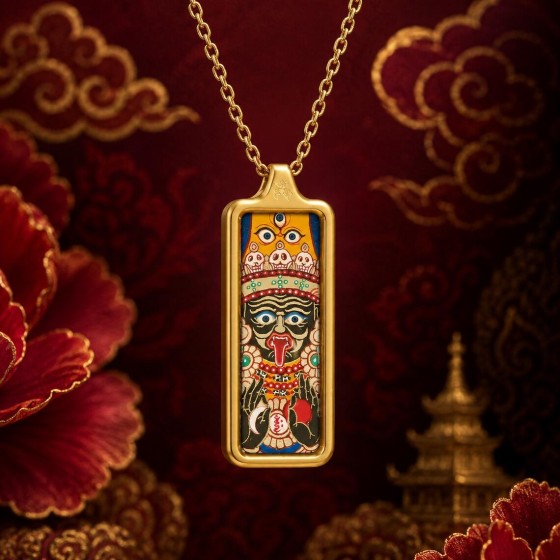
Common motifs include the eight auspicious symbols, lotus, vajra, dharma wheel, and deity images used in thangka-inspired pendants or amulet boxes.
Why are turquoise and coral so common?
In Tibetan and Himalayan tradition, turquoise and coral are widely associated with protection, vitality, and auspicious meaning, which makes them popular in both traditional and modern jewelry.
Is modern Tibetan jewelry still traditional?
Many contemporary pieces keep traditional symbols and craft references, but materials and scale may be adapted for daily wear, gifting, and international markets.
Explore wearable Tibetan art in our Tibetan Thangka collection and Tibetan jewelry collection.
Today, the same thangka tradition is also worn as thangka jewelry, from pendants to necklaces and amulets.